California’s AAM Road Map: What the SB 800 Report Means for the Next Three Years
On October 15, California published its first road map for Advanced Air Mobility (AAM), the electric and hydrogen aircraft industry that includes air taxis, regional logistics, and new forms of emergency response.
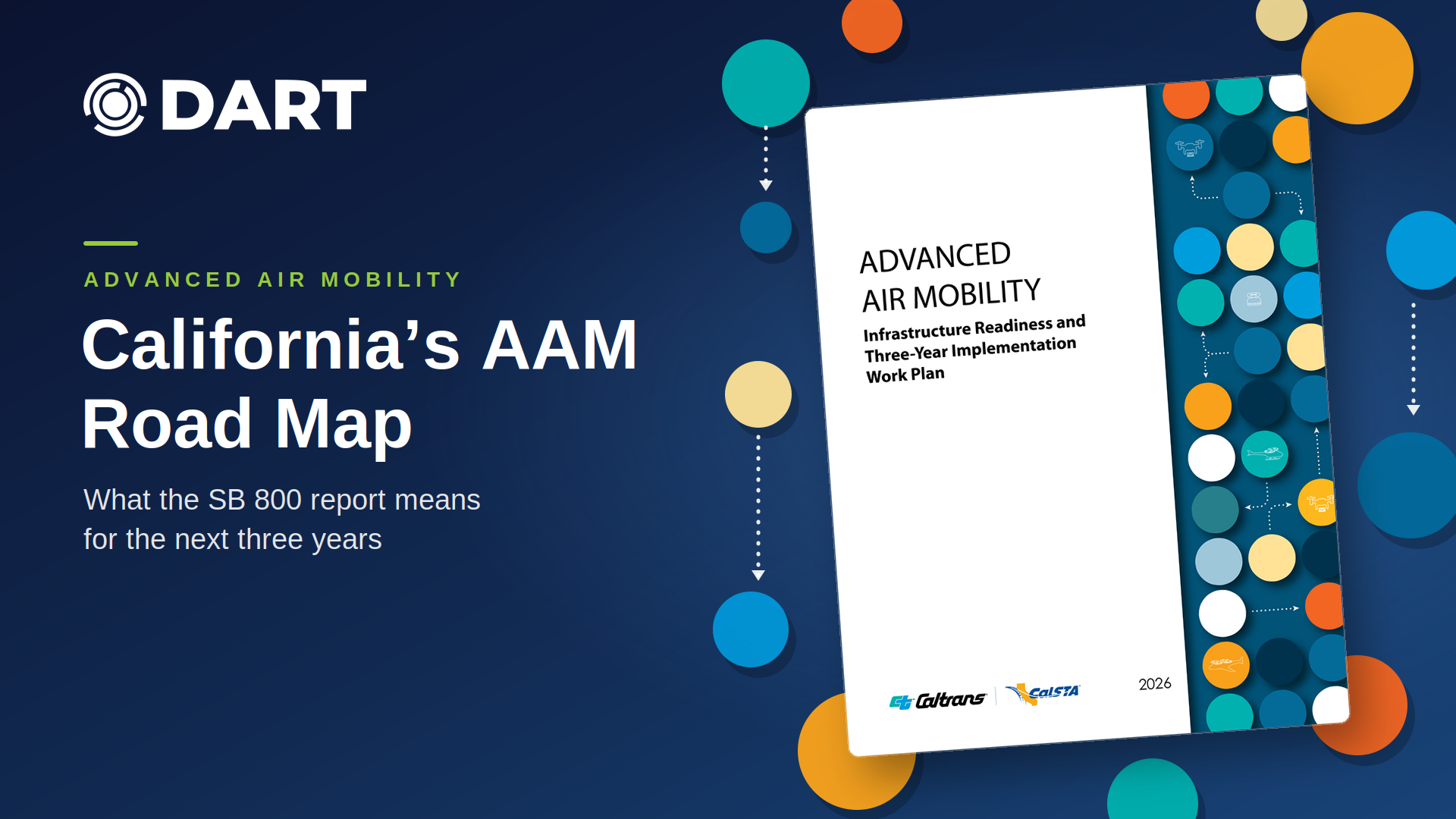
The Advanced Air Mobility Infrastructure Readiness and Three-Year Implementation Work Plan was prepared by Caltrans and the California State Transportation Agency to meet SB 800, a 2023 law authored by Senator Anna Caballero. An advisory panel of federal, state and local agencies, airports and aircraft manufacturers met four times between August 2023 and December 2024. Joby Aviation, Archer Aviation, Wisk Aero, Elroy Air, and Supernal were among the invited participants. Below we cover what the plan means for California as a whole, then the parts that matter most to DART and the Monterey Bay region.
The state picture
The three-year plan is mostly groundwork. Its twelve tasks are reviews, guidance and forums. The state will review the State Aeronautics Act, revise Caltrans’ siting and permit process so vertiports are handled much like heliports, update the airport land use planning handbook, add AAM to the California Transportation Plan, give local agencies outreach materials and project-review best practices, study energy needs, and set up forums where agencies, manufacturers and industry can work together. Caltrans, CalSTA and the Governor’s Office of Land Use and Climate Innovation own most of the tasks. While naming likely AAM use cases including passenger mobility, logistics and goods delivery, aeromedical services, emergency response, disaster relief, and industrial use, the report does not prioritize among them for investment.
Airports come first. The report expects early AAM flights to start and end at existing airports and heliports, mostly flown by pilots on board and following today’s FAA procedures. Fully uncrewed service is a long-term goal, with the industry maturing over 20 to 30 years. Vertiports away from airports are part of the vision, but they will need local approvals and environmental review.
Power is the bottleneck. Planners are told to assume charging loads of about one megawatt per aircraft position, and the report says many airports lack the electrical capacity, parking and hangar space for new aircraft. Utilities, fire agencies and local governments need to be involved early. DART’s own SOAR AAM Readiness Assessment, released in November 2024, points the same way for our region. It assessed five Monterey Bay general aviation airports (Hollister, Marina, Mesa Del Rey, Salinas and Watsonville) and found that most AAM projects there require airport electrification, charging infrastructure and more hangar space, that the airports have limited financial resources to lead them, and that no comprehensive grant program for airport electrification exists in California or nationally. It put the cost of a single charger in the mid-to-high six figures, with transformer lead times of 12 to 30 months as of 2023, and suggested that state and local governments set aside resources for airport infrastructure.
2028 is the date to watch. The FAA aims to have integrated operations at one or more key locations by 2028, and the report suggests California consider a fast-tracked pilot framework for the Los Angeles Olympics, with temporary airspace corridors and community engagement.
Money is the open question. The report says no current FAA grant program covers AAM-specific infrastructure. California’s general aviation airports, where manufacturers already build and test aircraft, receive only a fraction of federal airport funding. State airport aid, paid for by aviation fuel taxes, is projected at about $5.9 million for 2026-27 and is declining. The plan asks the state to look for new sources, but it does not provide them.
The Monterey Bay has already seen one major investment from the state to support AAM readiness. In September 2025, the Monterey Bay Tech Hub was awarded $7.45 million under the California Jobs First Regional Investment Initiative, with the Monterey Bay Economic Partnership as lead applicant, to launch the California Advanced Air Mobility Corridors Initiative (CAAMCI). The grant funds ground infrastructure, including vertiport readiness, communications systems and electric charging stations, and three operational flight test corridors connecting the Marina, Salinas, Hollister and Watsonville airports. It answers part of the need for airport infrastructure and regulatory clearance that both the SOAR assessment and the state report describe.
In tandem: AB 431
On September 27, 2026, the Governor signed AB 431, the Advanced Air Mobility Infrastructure Act. Starting January 1, 2027, it calls for Caltrans, working with the state’s energy, air quality, economic development and land use agencies, to set up a statewide AAM working group that includes industry stakeholders, and for AAM to be included in the next California Transportation Plan update. The bill’s findings also recognize AAM’s potential to create career pathways, training and apprenticeship opportunities. The act does not appropriate funds.
What it means for DART
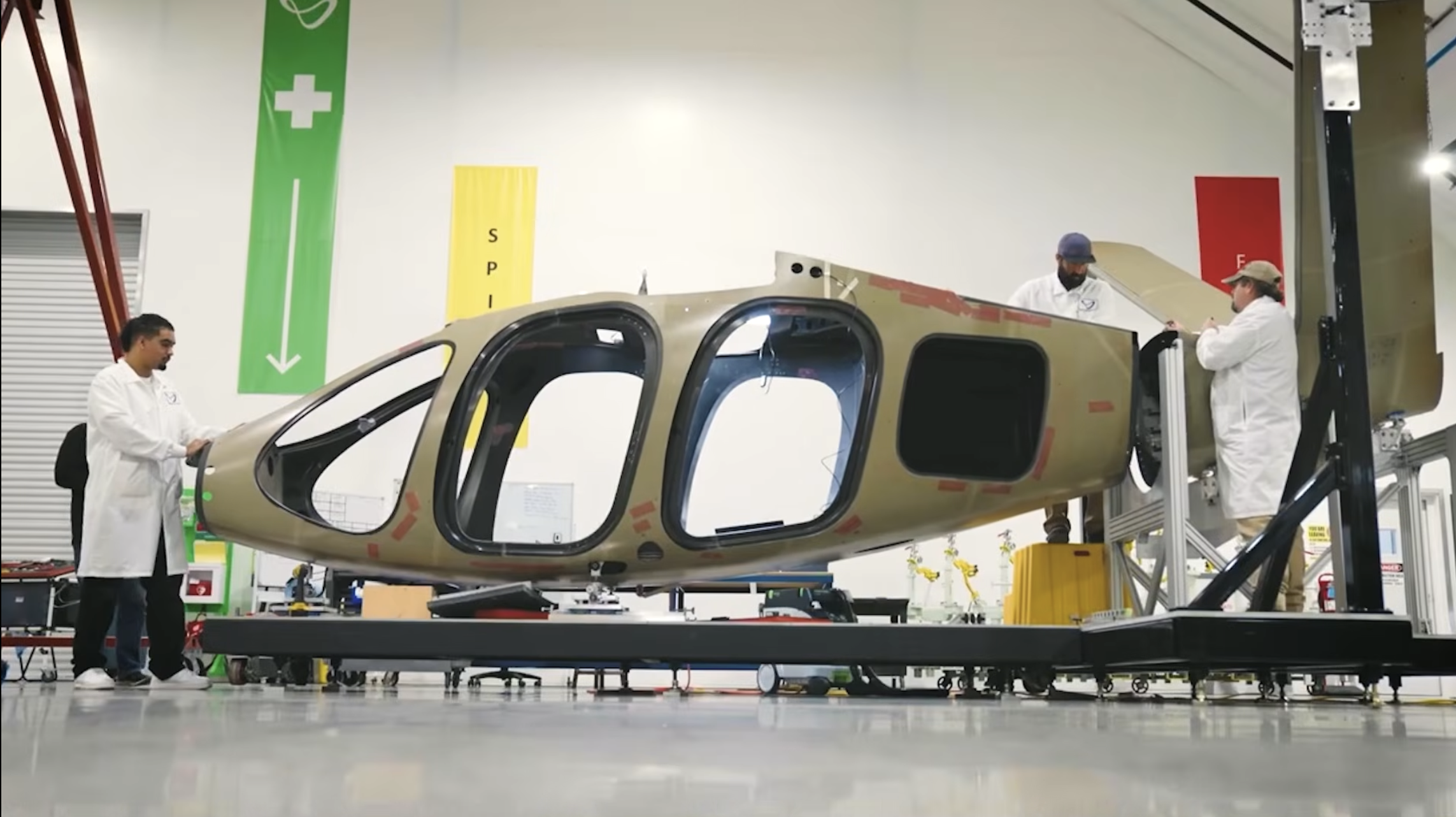
DART is uniquely positioned to continue leading AAM workforce development in California. The report’s equity chapter calls inclusive workforce development in this sector essential. It cites our Advanced Manufacturing Apprenticeship Program, built with Joby Aviation and the James Irvine Foundation, as a model for how to accomplish this: over 100 paid apprenticeships, a hire-on rate above 80 percent and an average wage increase of 30 percent. The report also takes an ecosystem approach, suggesting partnerships between community colleges, workforce boards, trade schools, universities, innovation hubs and industry to build pipelines for technicians, pilots and safety personnel. These points are welcome recognition for our partners and apprentices. It is also a signal, because none of the twelve tasks gives workforce development an owner or a timeline. Regional stakeholders will have to work to ensure that workforce development is kept as a state priority.
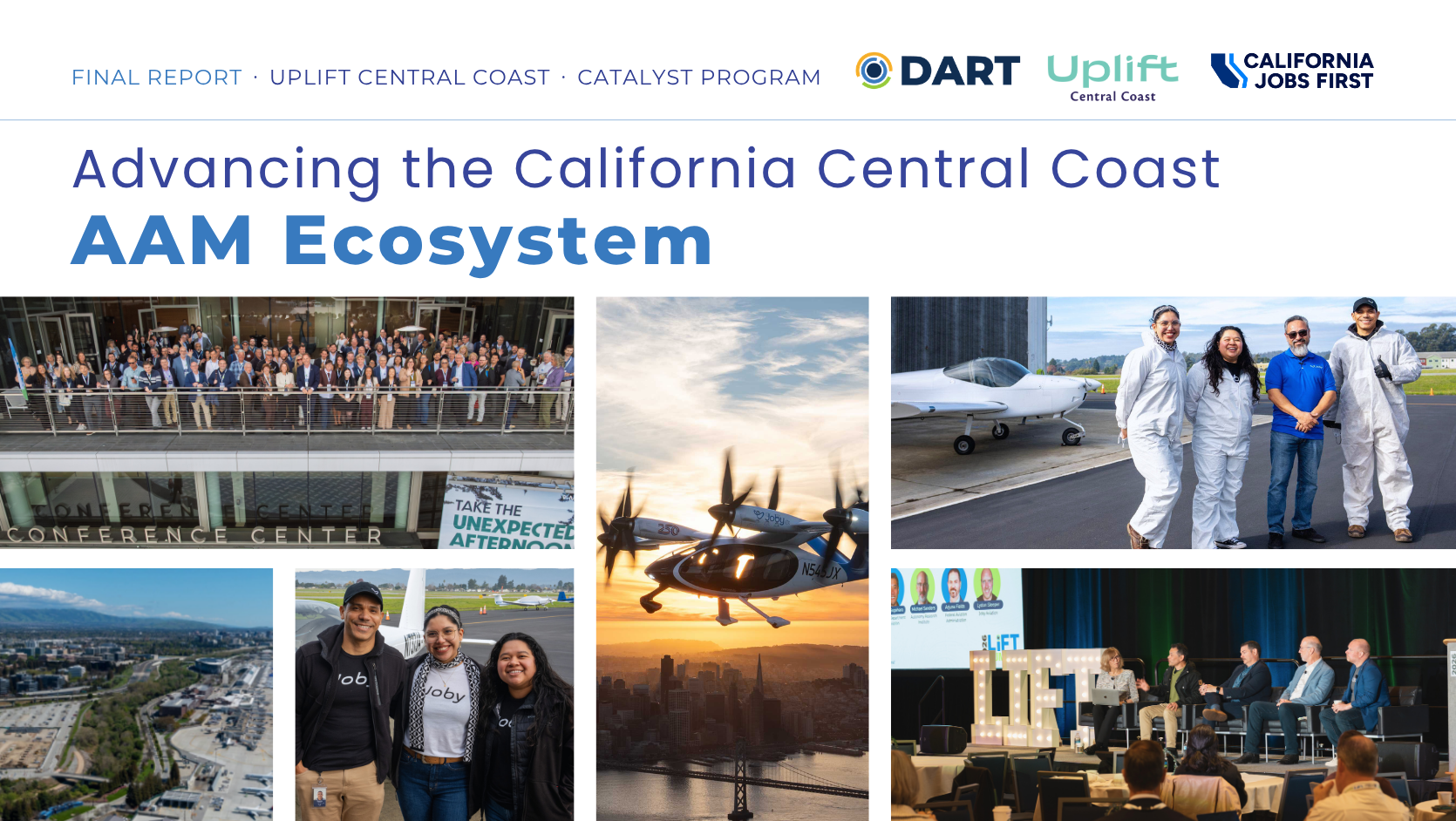
The Central Coast is on the map. The report describes the Monterey Bay region as home to the largest concentration of AAM manufacturers in the country. It points to the Uplift Central Coast action plans under California Jobs First, and it names DART and the Monterey Bay Economic Partnership as regional workforce and innovation leaders.
Hollister is the first test case. The plan’s community outreach task points to NASA’s Hollister Project, where NASA, industry and the state’s land use office are working on outreach and education with underserved communities. Hollister is in San Benito County, part of our tri-county region. Hollister’s airport is also one of the four that the CAAMCI flight test corridors will connect.
Training space and airport funding. Since July 2025, state Acquisition and Development grants can fund educational facilities and equipment at public-use airports, alongside charging stations and microgrids. The catch is that the grants have not been funded since fiscal year 2017-18, because fuel tax revenue has fallen. The report also supports hands-on training environments at upgraded airports, so restoring this program matters to workforce programs like ours.
Communities at the table. The report calls for outreach to underserved communities, training and support so community organizations can take part in AAM planning, and measurable equity goals. That matches work our community partners already do, and we think they belong in the process from the start. DART has worked to support community-wide collaboration around AAM through its annual LIFT Summit and recent Technology in the Workforce Summit.
Looking ahead
The report does not promise air taxis next year. It sets up the rules, permits, forums and planning that will decide where and how this industry lands in California. The state has now said in writing that jobs and community access are part of the plan. DART will continue to work to ensure that these goals are upheld and that California leads the way in workforce development and community planning for AAM.