From the Salinas Valley to the Polder: How a Transatlantic Collaboration Is Landing on the Central Coast
Something unusual is happening on the Central Coast this month.
On June 18 and 19, a delegation of Dutch and California policymakers, entrepreneurs, researchers, and innovators will arrive in Santa Cruz and Monterey as part of the California × Netherlands 2026 Exchange — a ten-day working tour across California’s emerging mobility and clean energy ecosystem. And Monterey Bay DART, in partnership with Santa Cruz Works and UC Santa Cruz, will be hosting them right here at home.
This isn’t a ribbon-cutting or a press event. It’s a working exchange: candid conversations, site visits, and relationship-building between people who are trying to solve similar problems on opposite sides of the Atlantic. We’re honored to play a role in bringing that exchange to the Central Coast, and we want to share the context — and the invitation — with our community.
Why the Central Coast Is Part of This Story
For years, Monterey Bay DART has been building toward a specific vision: a climate-smart , low-altitude economy that is accessible, resilient, and rooted in our region’s communities and landscape. That means drones operating in our agricultural fields and coastal corridors. It means advanced air mobility infrastructure emerging at places like the Marina Municipal Airport. It means local people — students from Hartnell College, veterans from the Naval Postgraduate School and Presidio of Monterey, young people from Seaside — finding real, well-paying careers in aviation and aerospace technology.
What we’ve come to understand, through years of this work, is that no region figures this out alone. The Central Coast’s challenges — workforce gaps, airspace complexity, climate vulnerability, agricultural transformation — are shared by communities around the world. And some of those communities are further along in finding answers.
The Netherlands is one of them.
A Transatlantic Collaboration, Built on Trust
In August 2025, DART joined a California delegation to the Netherlands to participate in the California–Netherlands Climate & Mobility Innovation Exchange, which culminated in the signing of the Transatlantic Agreement on Air Mobility (2025–2028). That agreement, signed by DART alongside METIP, CCTA, the Electric Flying Connection, and the Coast-to-Coast Foundation (recently expanded to include CAMI and the Netherlands Aerospace Center) , commits partners on both sides of the Atlantic to joint projects, knowledge exchange, and workforce collaboration around advanced air mobility and clean transportation.
In October 2025, the collaboration came home: DART, Joby Aviation, and Airspace Integration hosted a high-level California–Netherlands–EU delegation at Joby’s Marina campus and at Airspace Integration’s coastal test range in La Selva Beach. Participants included representatives from CalSTA, Caltrans, CCTA, TAMC, the European Commission, the Netherlands Consulate, Blue Lake Rancheria, and UC Santa Cruz, alongside counterparts from the Province of North Holland and the Ministry of Infrastructure and Water Management.
As DART Executive Director Josh Metz put it at the time: “By connecting California’s innovation ecosystem with our Dutch counterparts, we’re moving from dialogue to action — building the shared infrastructure, workforce, and governance models needed for a climate-smart, inclusive future of flight.”
The June 2026 exchange is the next chapter in that relationship. The Dutch delegation will spend ten days traveling across California — from Sacramento policy briefings, to Bay Area innovation hubs, before arriving here on the Central Coast – then on to Southern California’s industry and infrastructure scale.
What’s Happening Here, and Why It Matters
The June 18–19 stops in Santa Cruz and Monterey are designed around one of the questions the exchange is built on: what does it actually take to move from pilot project to deployment?
The Central Coast is a compelling place to explore that question. It’s where Joby Aviation is building the next generation of electric aircraft. It’s where Airspace Integration is developing real-world drone corridor infrastructure. It’s where DART and a broad set of industry, community and institutional partners — have been working to demonstrate that low-altitude operations can scale responsibly in complex, real-world environments. And increasingly, it’s where the workforce of the future low-altitude economy is being trained.
These visits, organized in partnership with Santa Cruz Works and UC Santa Cruz, will give the delegation firsthand exposure to the ecosystem DART and its partners are building here — and open a genuine dialogue about what the Netherlands and California can learn from each other.
Building the Workforce: MsUAS Pathways and the UCSC DUCC Project
One of the threads we’re most excited to bring into this conversation is our work on workforce development — specifically the MsUAS Pathways Project and its partnership with the UC Santa Cruz CITRIS Initiative for Drone Education and Research (CIDER).
Launched this spring with support from the James Irvine Foundation, MsUAS Pathways is DART’s two-year initiative — implemented in partnership with Hartnell College — to connect people across Monterey, Santa Cruz, and San Benito counties to real careers in drones and aerospace technology. The program aims to serve 150 participants, prepare at least 50 for FAA Part 107 commercial drone certification, and open credible pathways for people who’ve never seen themselves in this industry: farmworker families, first-generation college students, Seaside youth, military veterans.
What makes MsUAS Pathways especially meaningful is the ecosystem it’s part of.
Through a recently updated Memorandum of Understanding, DART and CITRIS Aviation have formalized how our workforce efforts work together as a unified regional strategy. The principle is simple: one regional sUAS ecosystem, two complementary investment strategies.
UC Santa Cruz CIDER’s Drones Uplifting the Central Coast (DUCC) initiative — funded by California Jobs First with nearly $3 million — provides statewide stewardship of FAA Part 107 curriculum, instructor training, and delivery coordination, reaching K–12 schools and community colleges across California. CIDER Director Rebecca Fenwick leads that work, with CITRIS Aviation Faculty Director Ricardo SanFelice anchoring the institutional partnership.
MsUAS Pathways, funded by the James Irvine Foundation, brings that curriculum into real classrooms on the Central Coast: supporting faculty at Hartnell College and Monterey Peninsula College, building adult learner pathways, and creating the kind of community-embedded implementation that a statewide program can’t always reach. Led by DART Project Lead Peter Church — a former Navy H-60 Seahawk pilot and Joby Aviation training developer — the program is designed to make sure that when the funnel opens wide, people in our communities can actually move through it.
Together, DUCC and MsUAS Pathways demonstrate something important: that curriculum at scale and community-embedded implementation aren’t competing approaches — they’re the same strategy, executed at different altitudes.
This is also a replicable model. The MOU makes that explicit: UCSC CIDER provides curriculum and coordination capacity, while trusted local partners enable community-embedded implementation. What we’re building in Monterey and Santa Cruz counties can be adapted and adopted in agricultural communities across California — and, potentially, internationally.
Growing Our CITRIS Aviation Collaboration: The Aviation Prize Competition
The DART–CITRIS relationship is deepening beyond the workforce. DART’s growing collaboration with the CITRIS Aviation program includes engagement with the CITRIS Aviation Prize Competition — a vehicle for connecting student innovation with regional and statewide challenges in the low-altitude economy. DART has been an active and engaged partner for the Aviation Prize for the past 3-years, resulting in increased academic and industry partnerships, and DART securing a key team member, Jordan King, This partnership reflects a broader commitment: to link the research and innovation capacity of UC Santa Cruz with the deployment ecosystem being built on the Central Coast.
Where Cross-Sector Collaboration Becomes Regional Strategy
The Monterey Bay Tech Hub (MBTH), launched in 2024 by DART, UC Santa Cruz, and the Monterey Bay Economic Partnership, is a cross-sector effort advancing regional technology innovation in advanced air mobility, agtech, and marine tech. Anchored by industry leaders, regional airports, higher education institutions, local governments, and community organizations, the effort has already secured over $10 million in investment from California’s Jobs First Program — funding flight test corridors, workforce apprenticeships and curriculum development. Connected through a common mission, these assets are evolving into a regional model that the state and the world can point to — a story we’re bringing to our Dutch partners on June 18 and 19, and one we welcome new partners, funders, students, and community members to join us and help continue to shape.
An Invitation
This is where we extend an invitation to you.
If you’re a student exploring careers in aviation, robotics, or agricultural technology — there’s a pathway being built for you.
If you’re an educator at a Central Coast community college or high school — we want to talk about how to bring drone and aerospace curriculum into your classrooms.
If you’re a regional business, nonprofit, or community organization with a stake in how low-altitude technology develops in our region — the Dutch delegation’s visit is an opportunity to be part of a conversation that is shaping policy and practice in California and across the Atlantic.
If you’re a funder or investor who believes that a clean, accessible, community-rooted aviation economy is worth building — there has never been more momentum behind this work, or more need for the kind of patient, aligned investment that makes it sustainable.
The June 18–19 visits to Santa Cruz and Monterey are part of a larger exchange, but they’re also a moment for our region to show what we’re building — and to hear from international peers who are building something similar. We’d love for you to be part of it.
To learn more or connect about the June 18–19 visits, the MsUAS Pathways Project, or DART’s broader work, reach out at mbdart.org or follow us on LinkedIn and social media for updates.
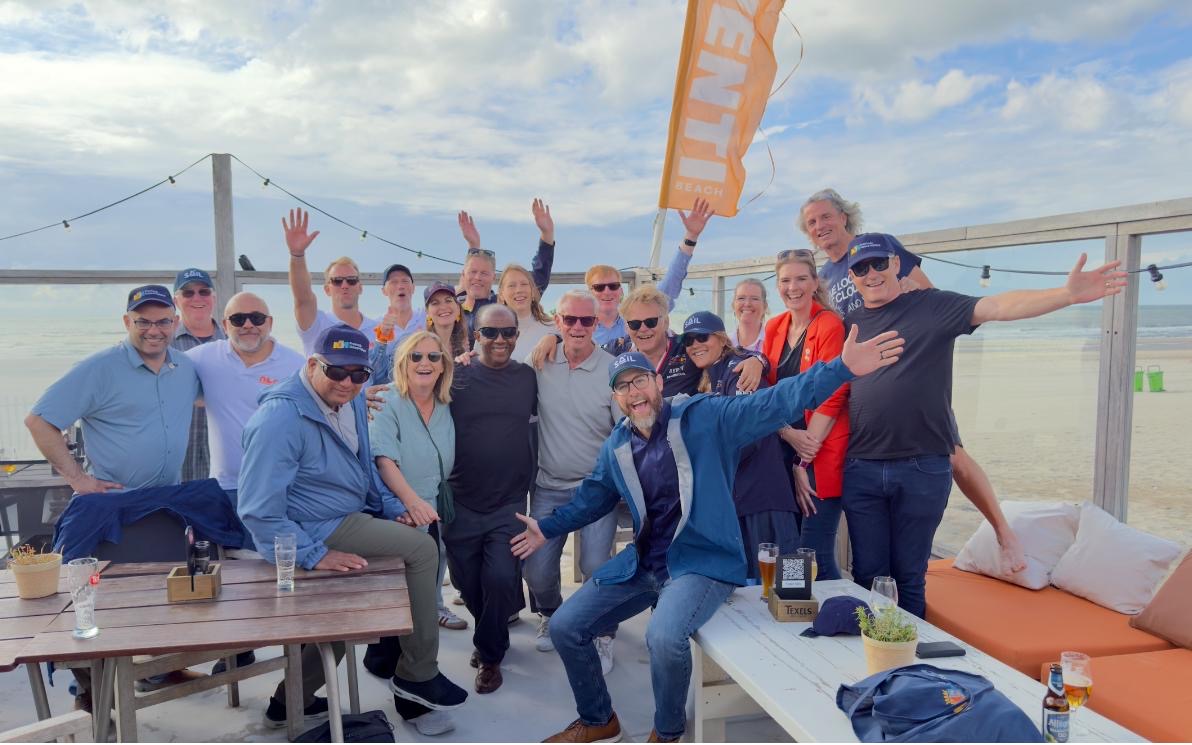
DART is grateful to our partners at Hartnell College, UC Santa Cruz CITRIS Aviation and CIDER, Santa Cruz Works, the James Irvine Foundation, California Jobs First, and the Coast-to-Coast Foundation for their collaboration and support in making this work possible. Feature photo by @meditarania.
Related reading: