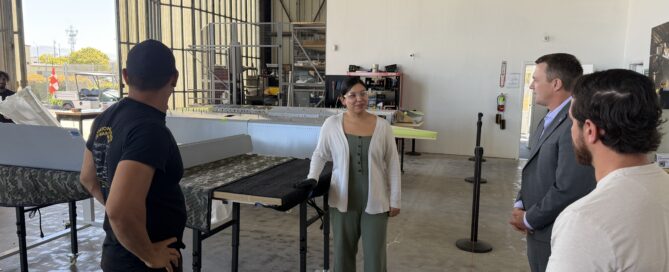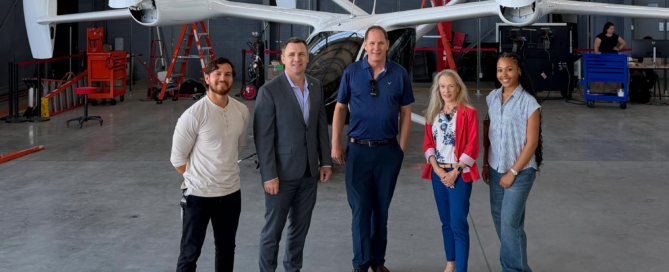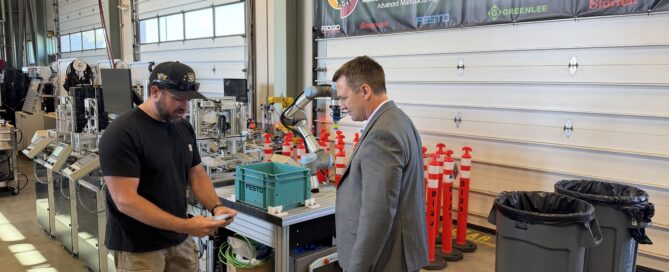
Something unusual is happening on the Central Coast this month.

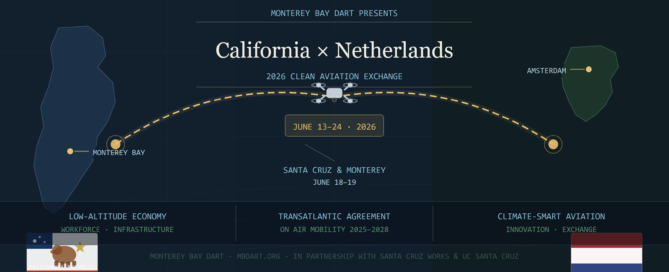
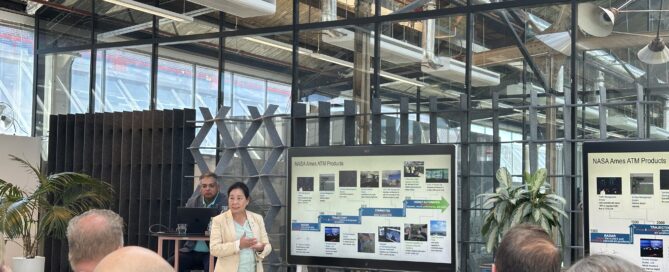
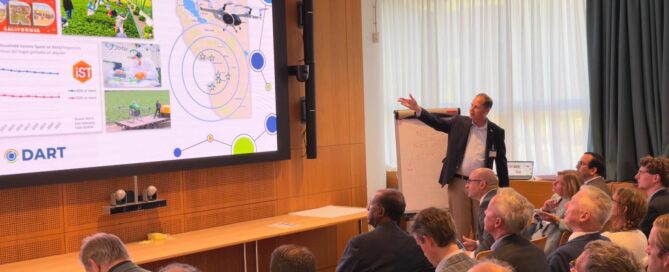
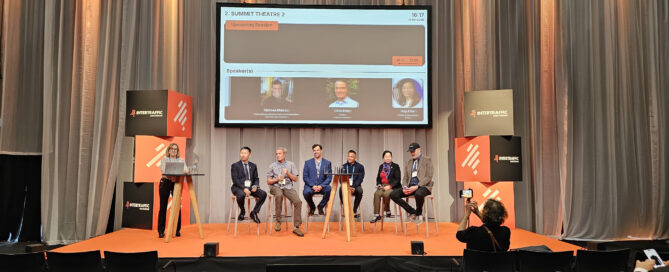
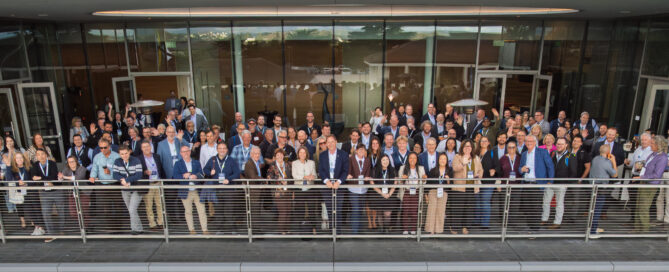
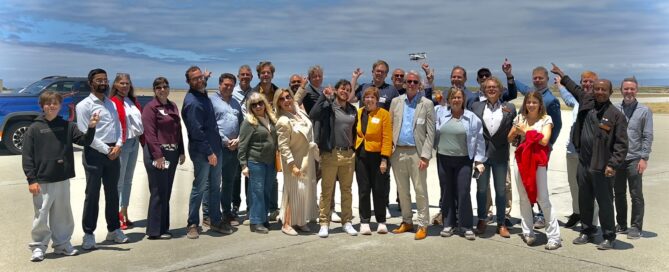
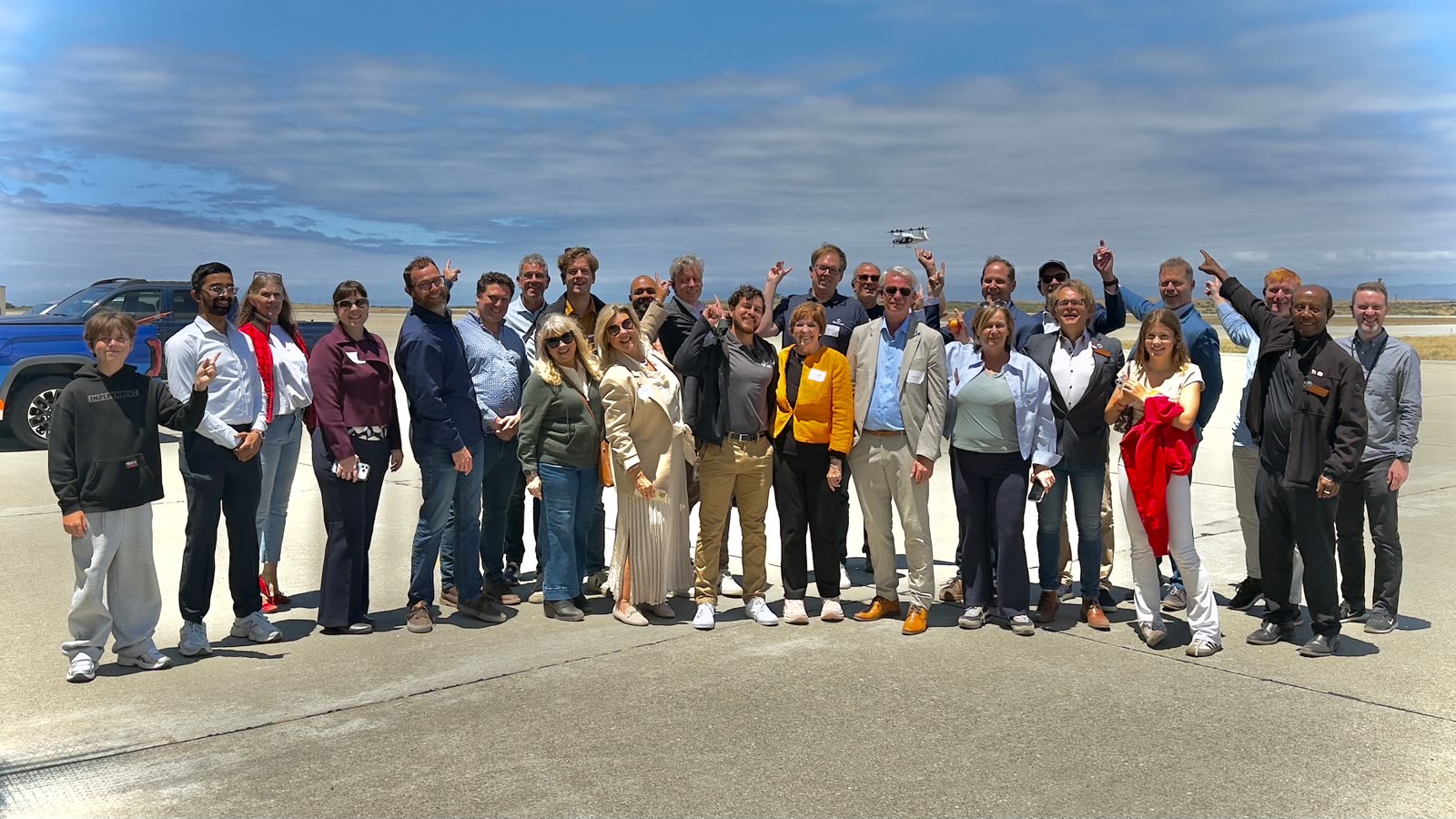
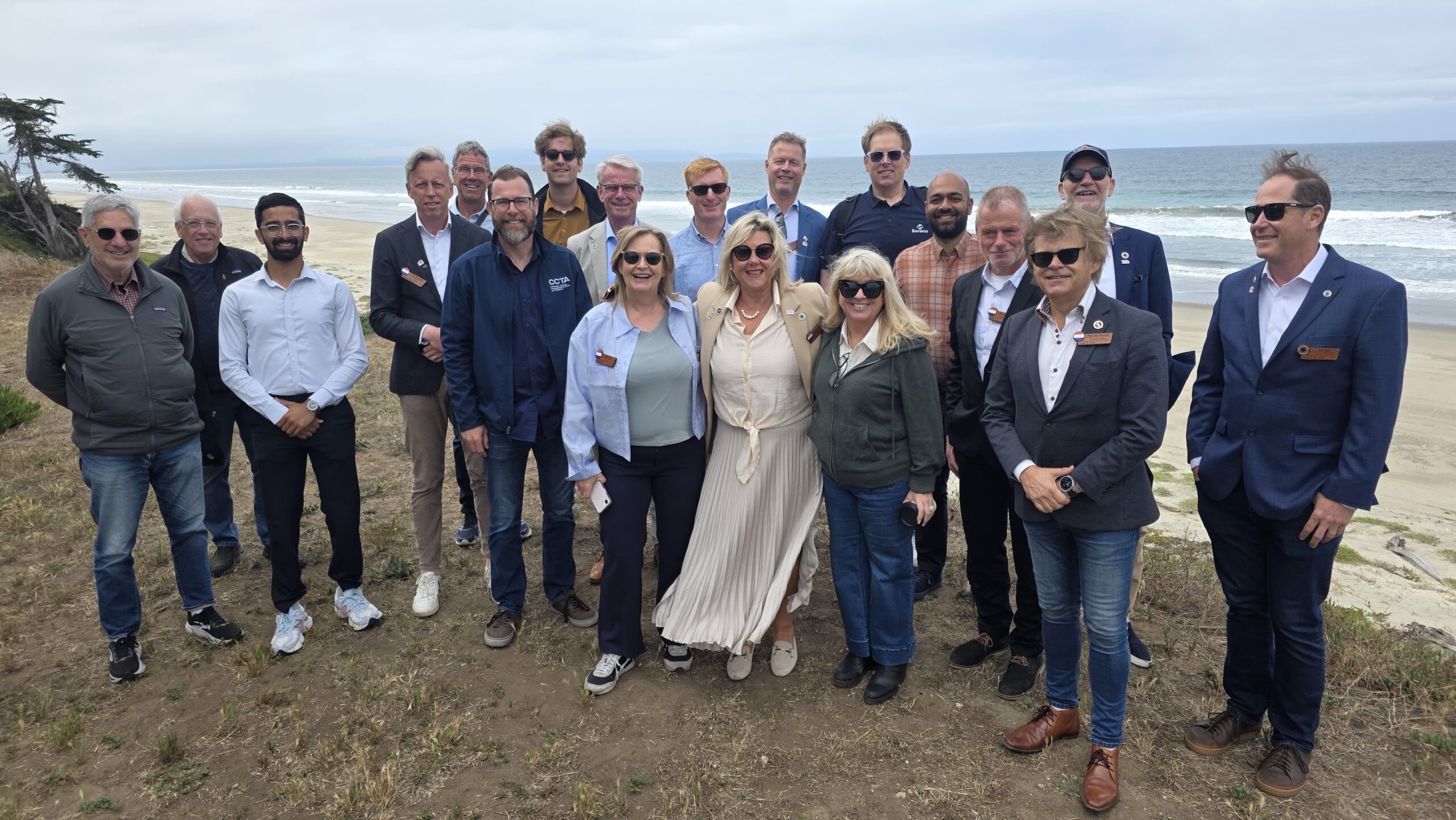
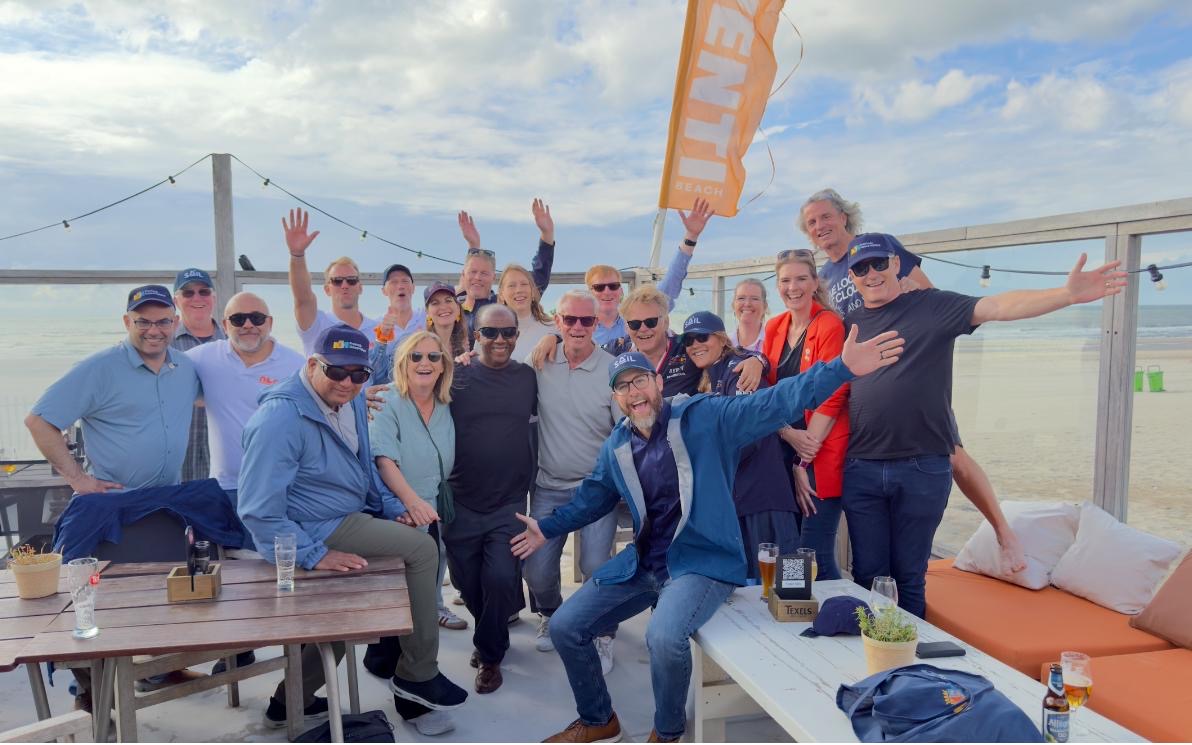
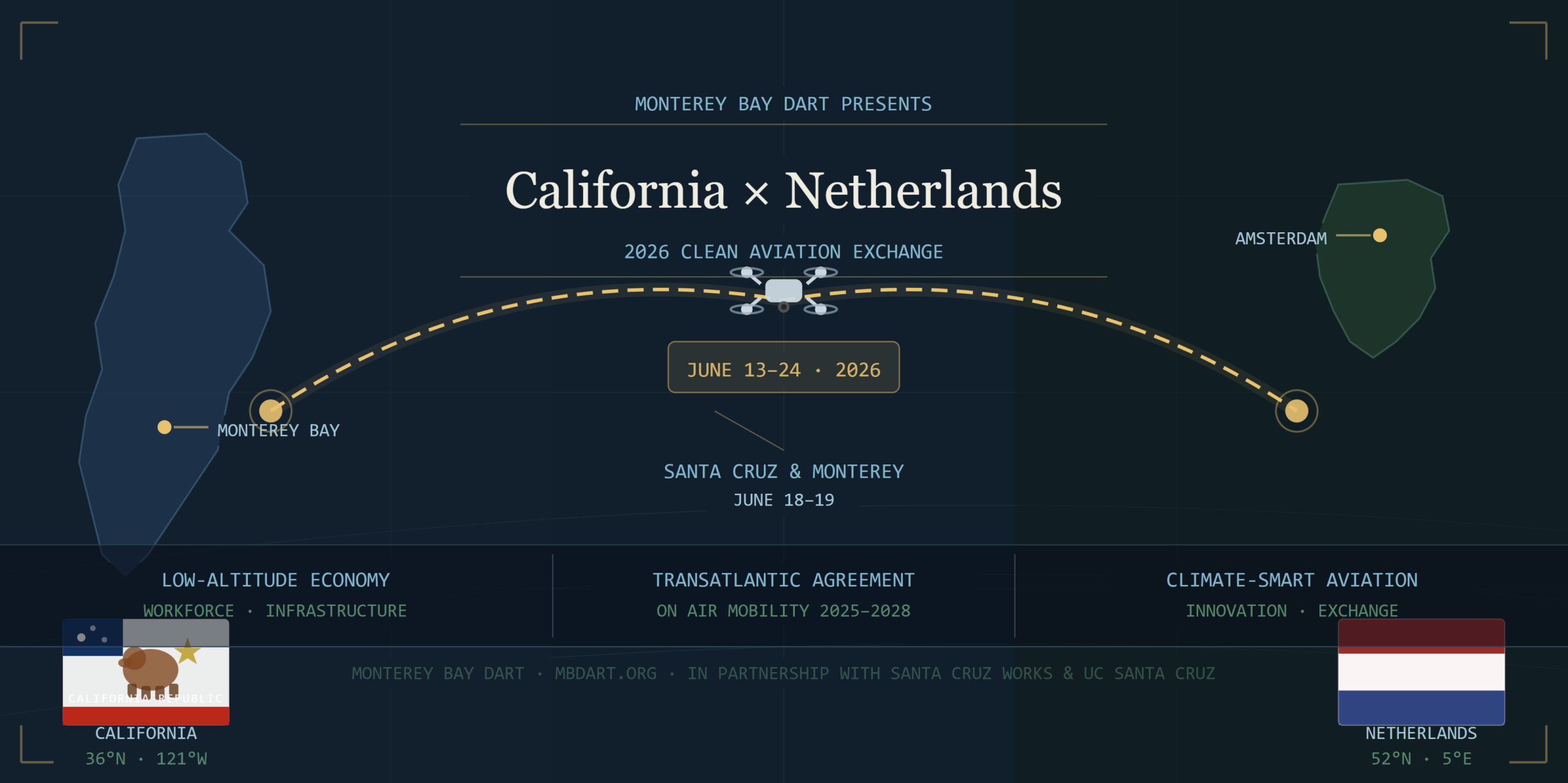
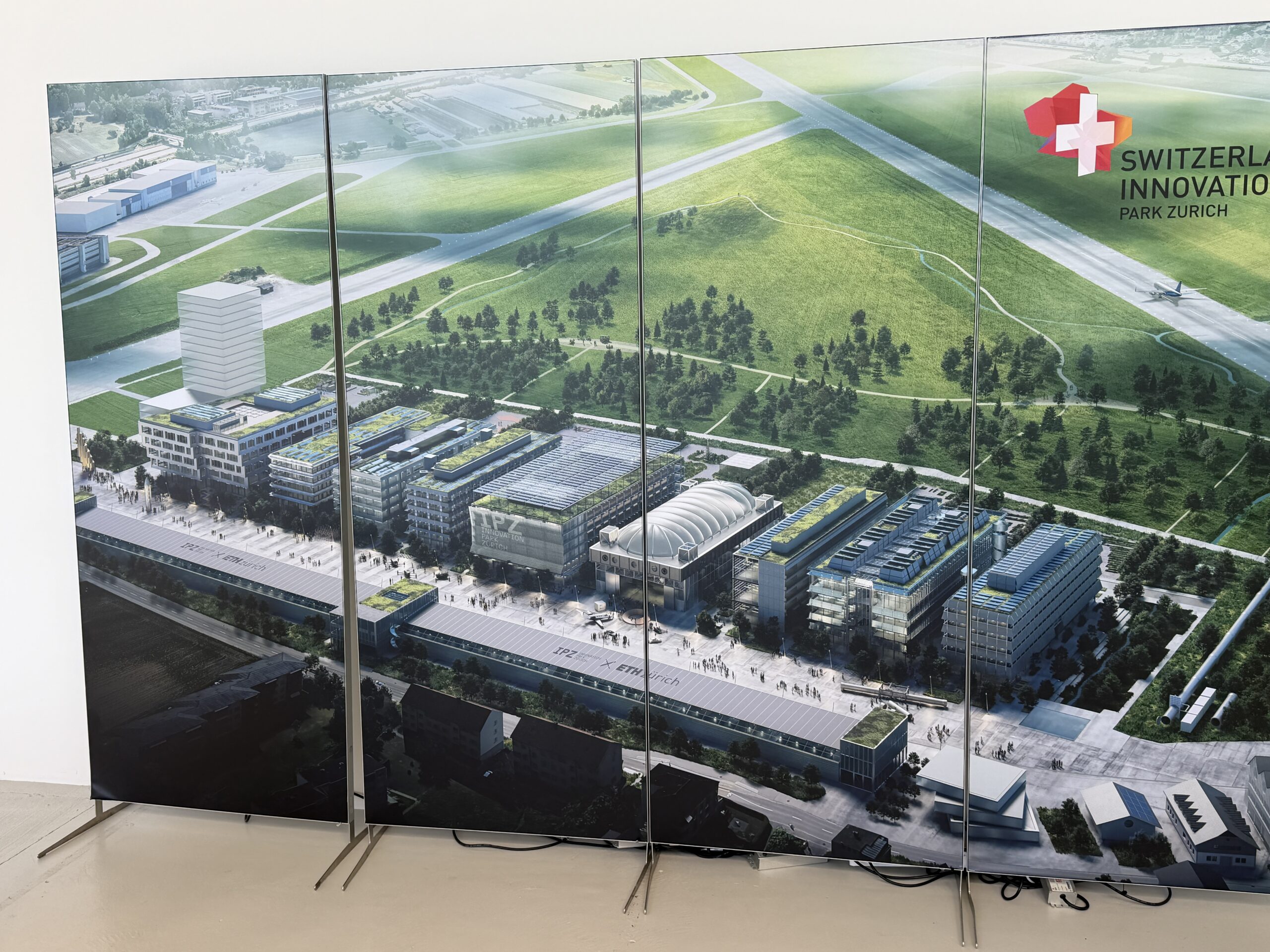
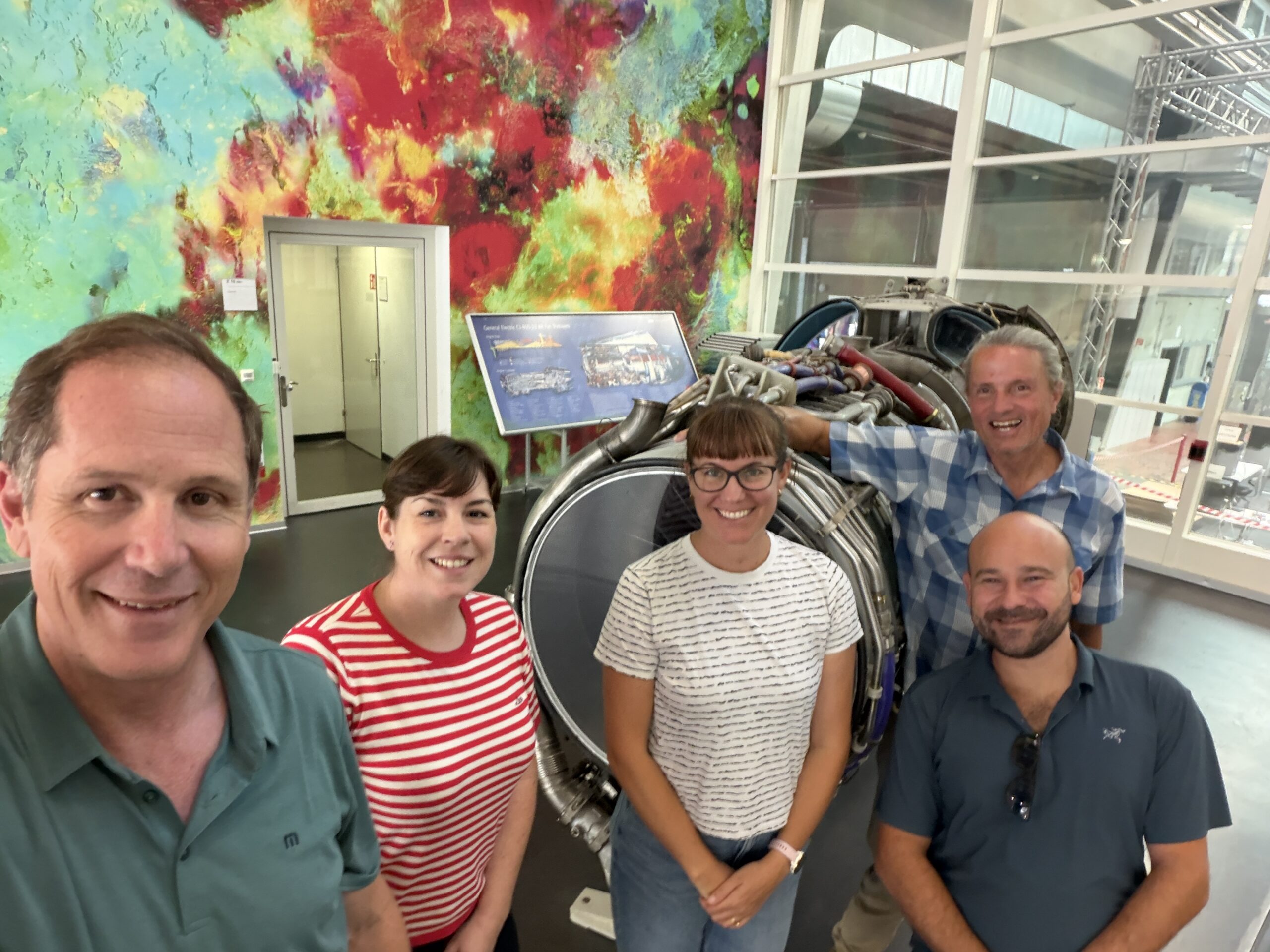
On June 18 and 19, a delegation of Dutch and California policymakers, entrepreneurs, researchers, and innovators will arrive in Santa Cruz and Monterey as part of the California × Netherlands 2026 Exchange — a ten-day working tour across California’s emerging mobility and clean energy ecosystem. And Monterey Bay DART, in partnership with Santa Cruz Works and UC Santa Cruz, will be hosting them right here at home.

This isn’t a ribbon-cutting or a press event. It’s a working exchange: candid conversations, site visits, and relationship-building between people who are trying to solve similar problems on opposite sides of the Atlantic. We’re honored to play a role in bringing that exchange to the Central Coast, and we want to share the context — and the invitation — with our community.

Why the Central Coast Is Part of This Story

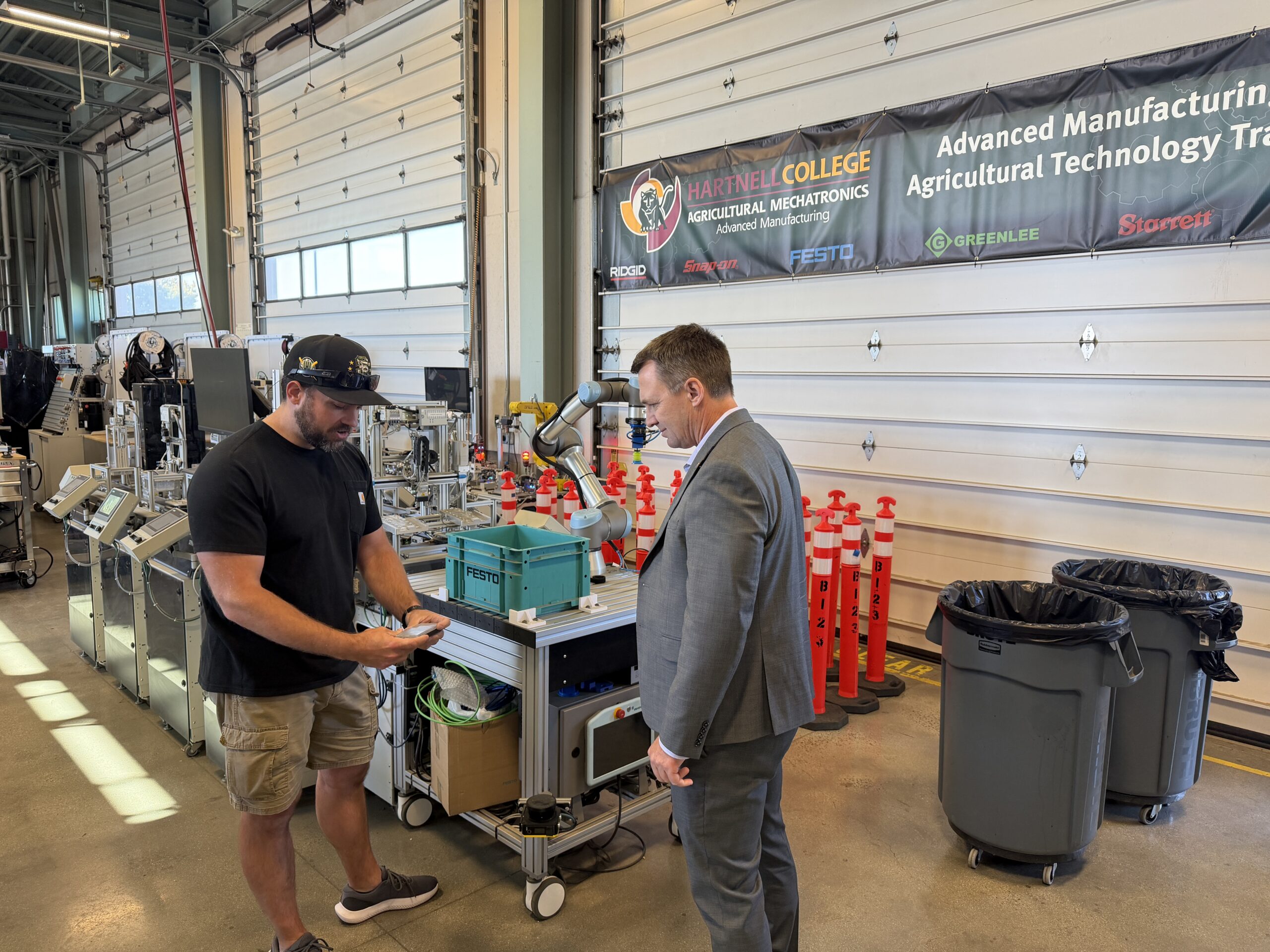
For years, Monterey Bay DART has been building toward a specific vision: a climate-smart , low-altitude economy that is accessible, resilient, and rooted in our region’s communities and landscape. That means drones operating in our agricultural fields and coastal corridors. It means advanced air mobility infrastructure emerging at places like the Marina Municipal Airport. It means local people — students from Hartnell College, veterans from the Naval Postgraduate School and Presidio of Monterey, young people from Seaside — finding real, well-paying careers in aviation and aerospace technology.

What we’ve come to understand, through years of this work, is that no region figures this out alone. The Central Coast’s challenges — workforce gaps, airspace complexity, climate vulnerability, agricultural transformation — are shared by communities around the world. And some of those communities are further along in finding answers.

The Netherlands is one of them.

A Transatlantic Collaboration, Built on Trust

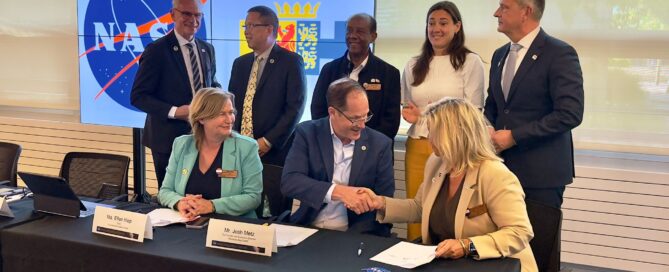
In August 2025, DART joined a California delegation to the Netherlands to participate in the California–Netherlands Climate & Mobility Innovation Exchange, which culminated in the signing of the Transatlantic Agreement on Air Mobility (2025–2028). That agreement, signed by DART alongside METIP, CCTA, the Electric Flying Connection, and the Coast-to-Coast Foundation (recently expanded to include CAMI and the Netherlands Aerospace Center) , commits partners on both sides of the Atlantic to joint projects, knowledge exchange, and workforce collaboration around advanced air mobility and clean transportation.

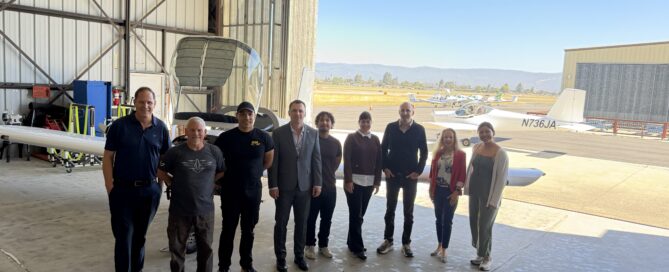
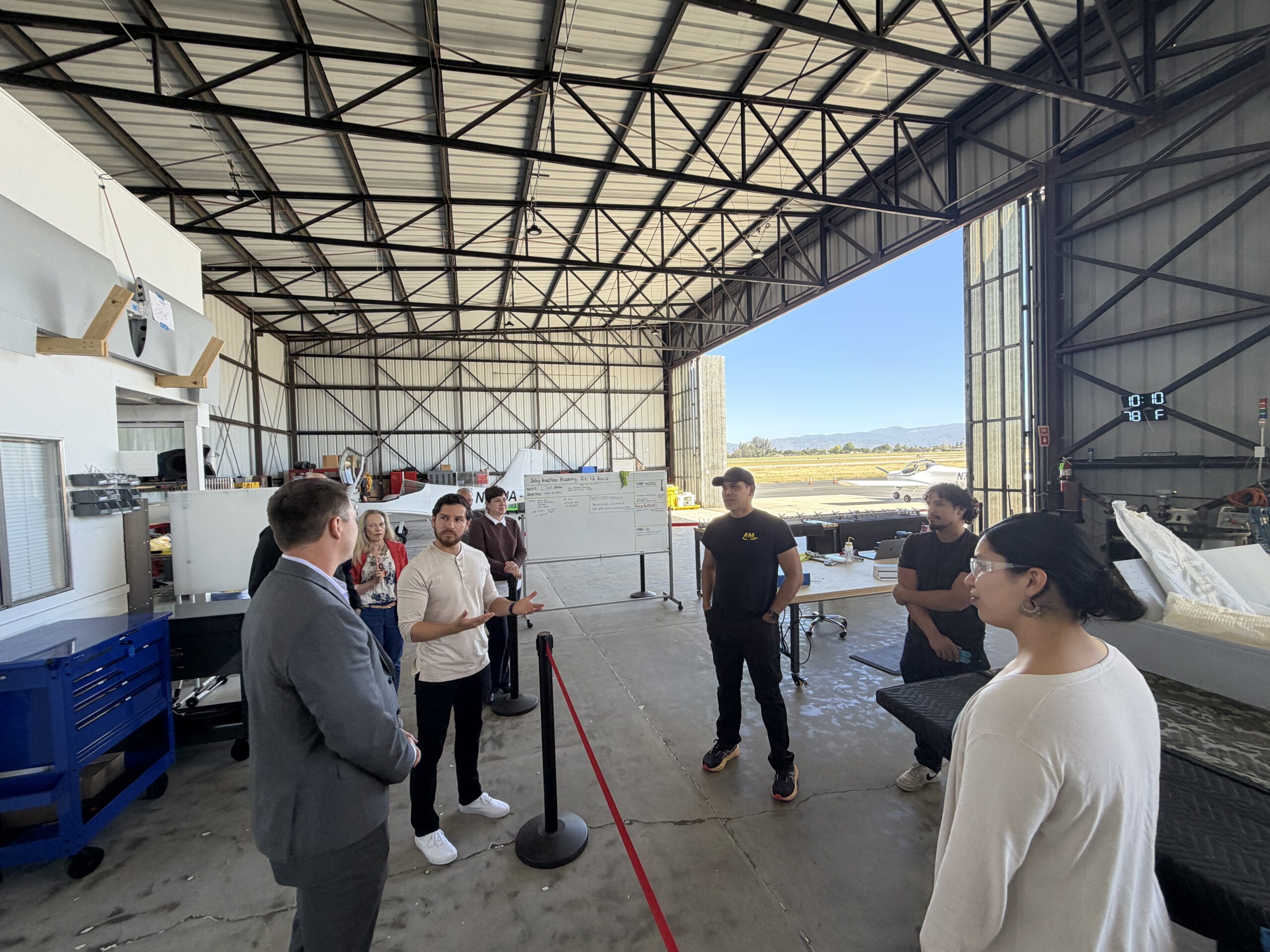
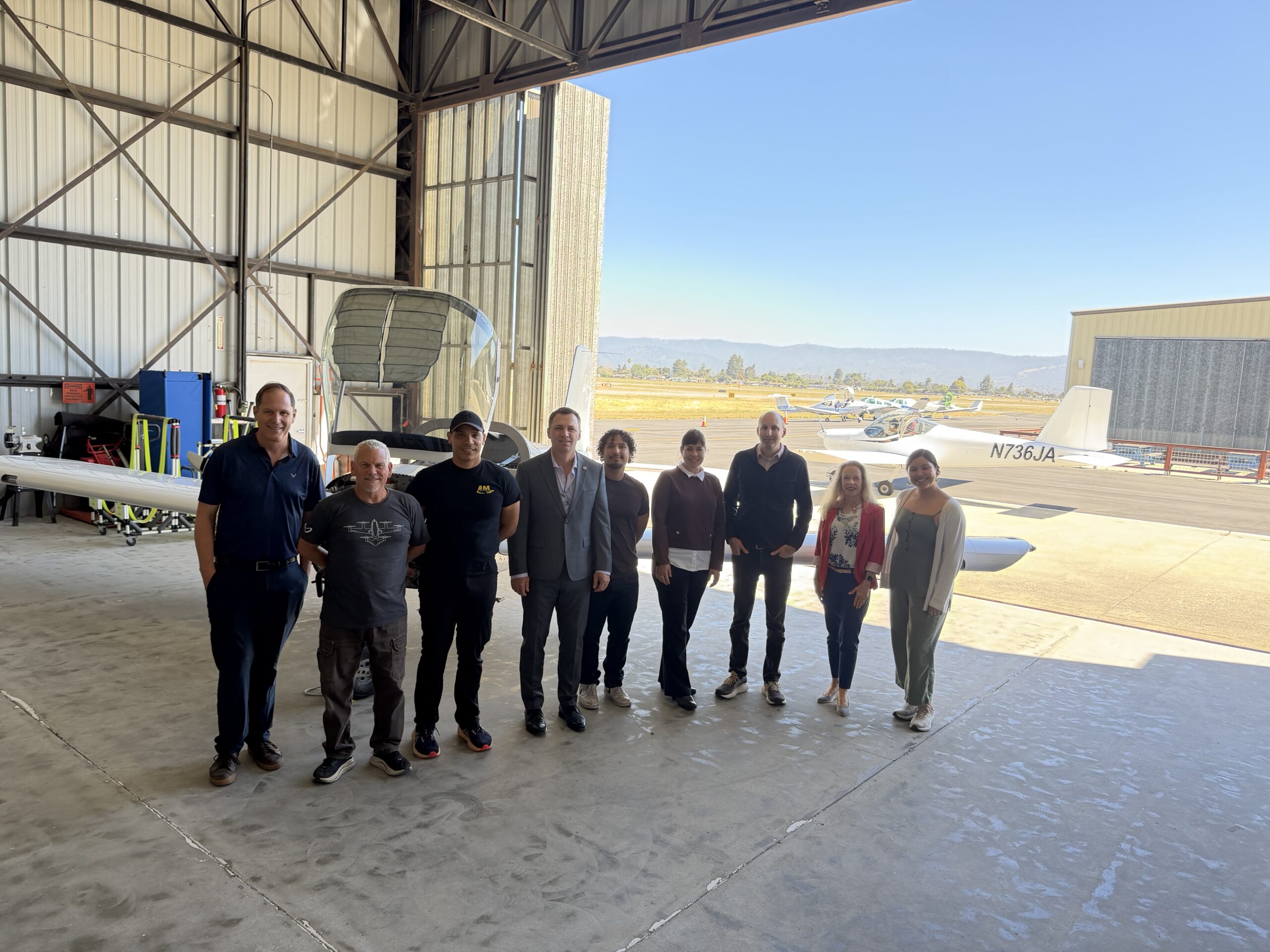
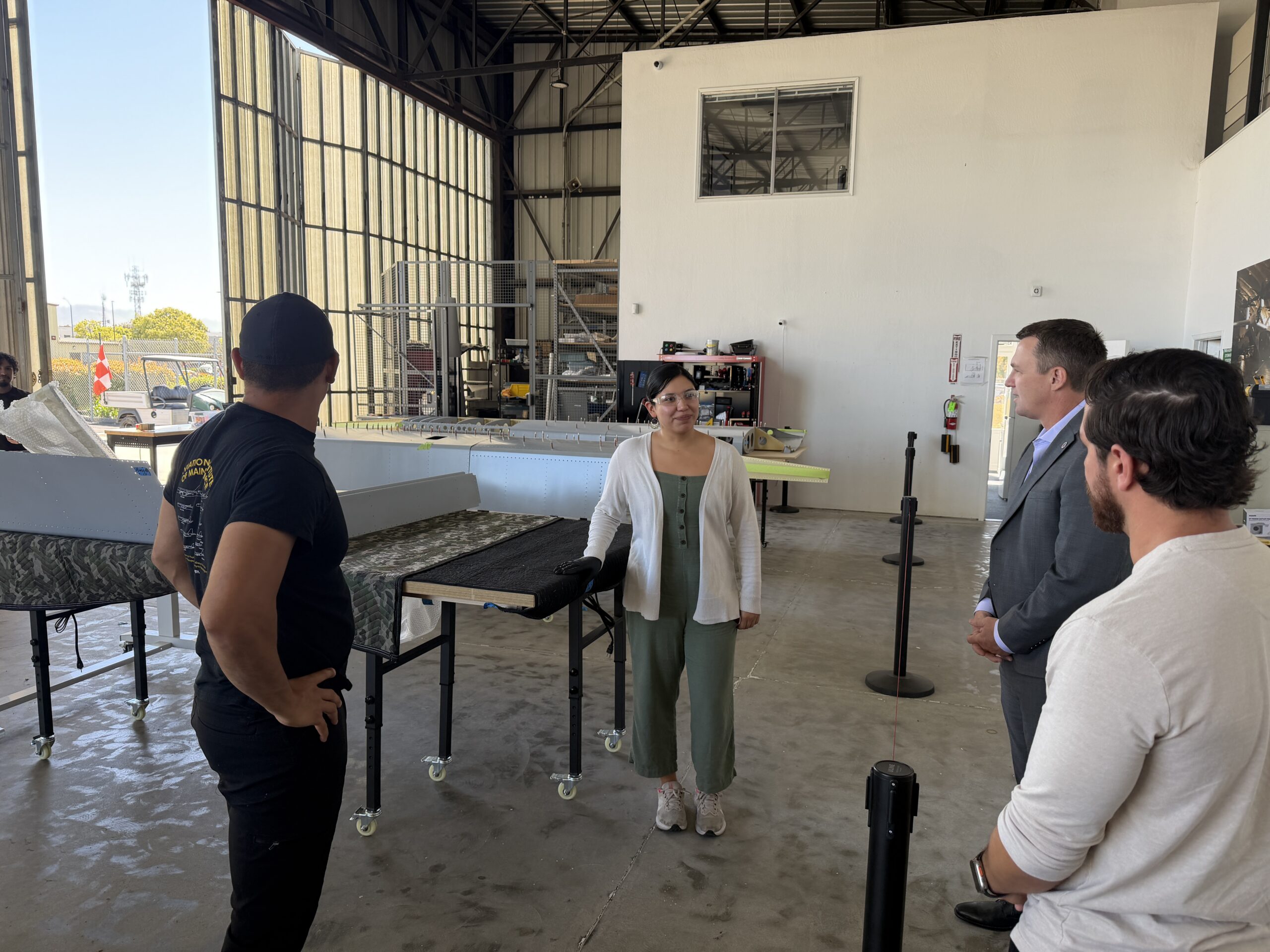
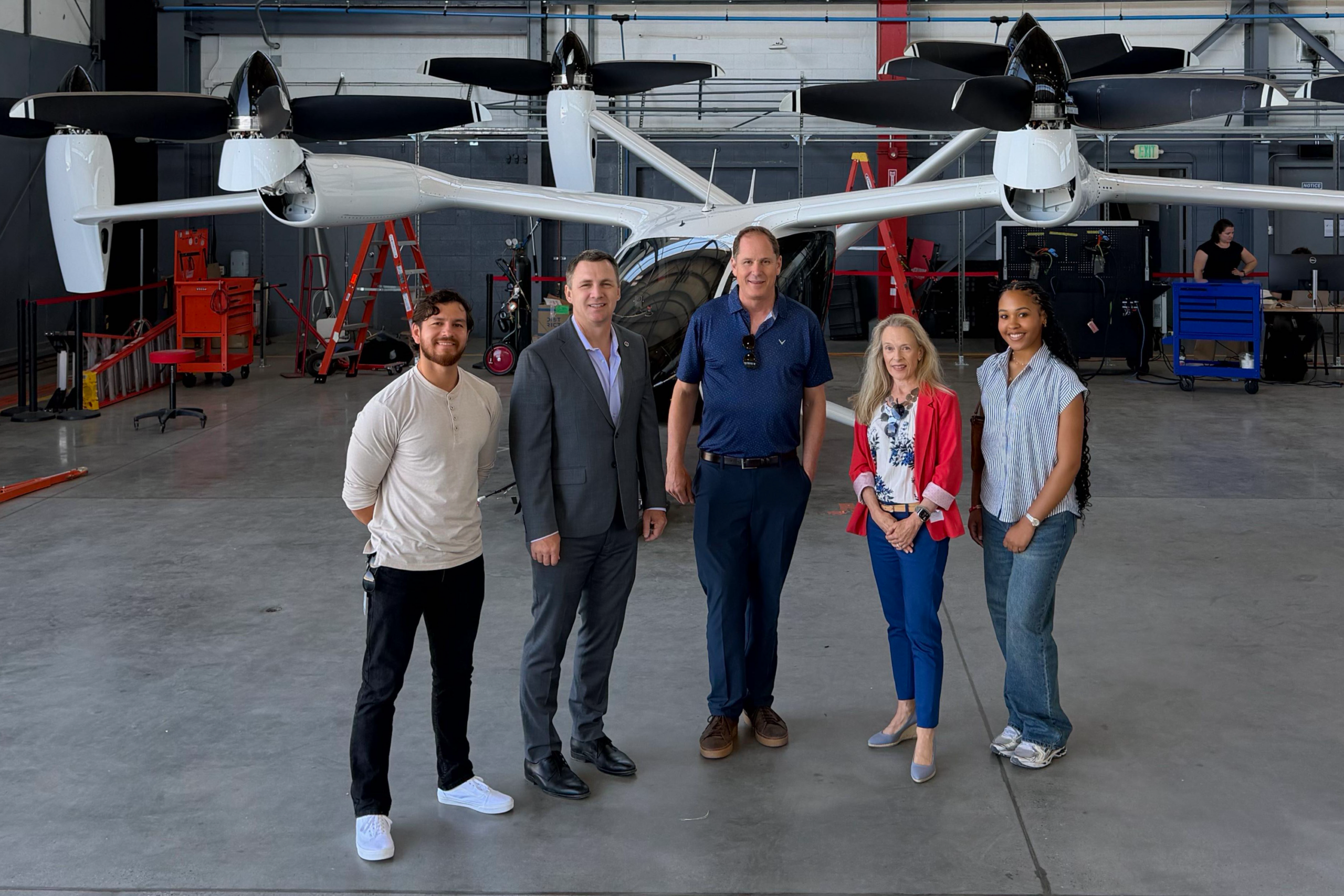
In October 2025, the collaboration came home: DART, Joby Aviation, and Airspace Integration hosted a high-level California–Netherlands–EU delegation at Joby’s Marina campus and at Airspace Integration’s coastal test range in La Selva Beach. Participants included representatives from CalSTA, Caltrans, CCTA, TAMC, the European Commission, the Netherlands Consulate, Blue Lake Rancheria, and UC Santa Cruz, alongside counterparts from the Province of North Holland and the Ministry of Infrastructure and Water Management.

As DART Executive Director Josh Metz put it at the time: “By connecting California’s innovation ecosystem with our Dutch counterparts, we’re moving from dialogue to action — building the shared infrastructure, workforce, and governance models needed for a climate-smart, inclusive future of flight.”

The June 2026 exchange is the next chapter in that relationship. The Dutch delegation will spend ten days traveling across California — from Sacramento policy briefings, to Bay Area innovation hubs, before arriving here on the Central Coast – then on to Southern California’s industry and infrastructure scale.

What’s Happening Here, and Why It Matters

The June 18–19 stops in Santa Cruz and Monterey are designed around one of the questions the exchange is built on: what does it actually take to move from pilot project to deployment?

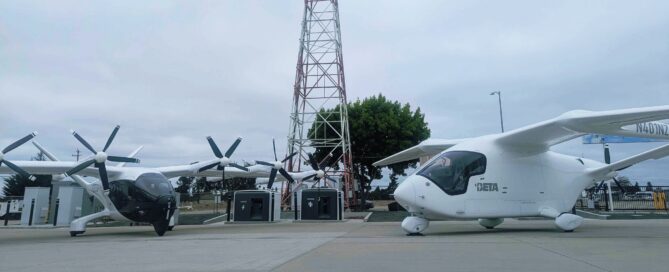
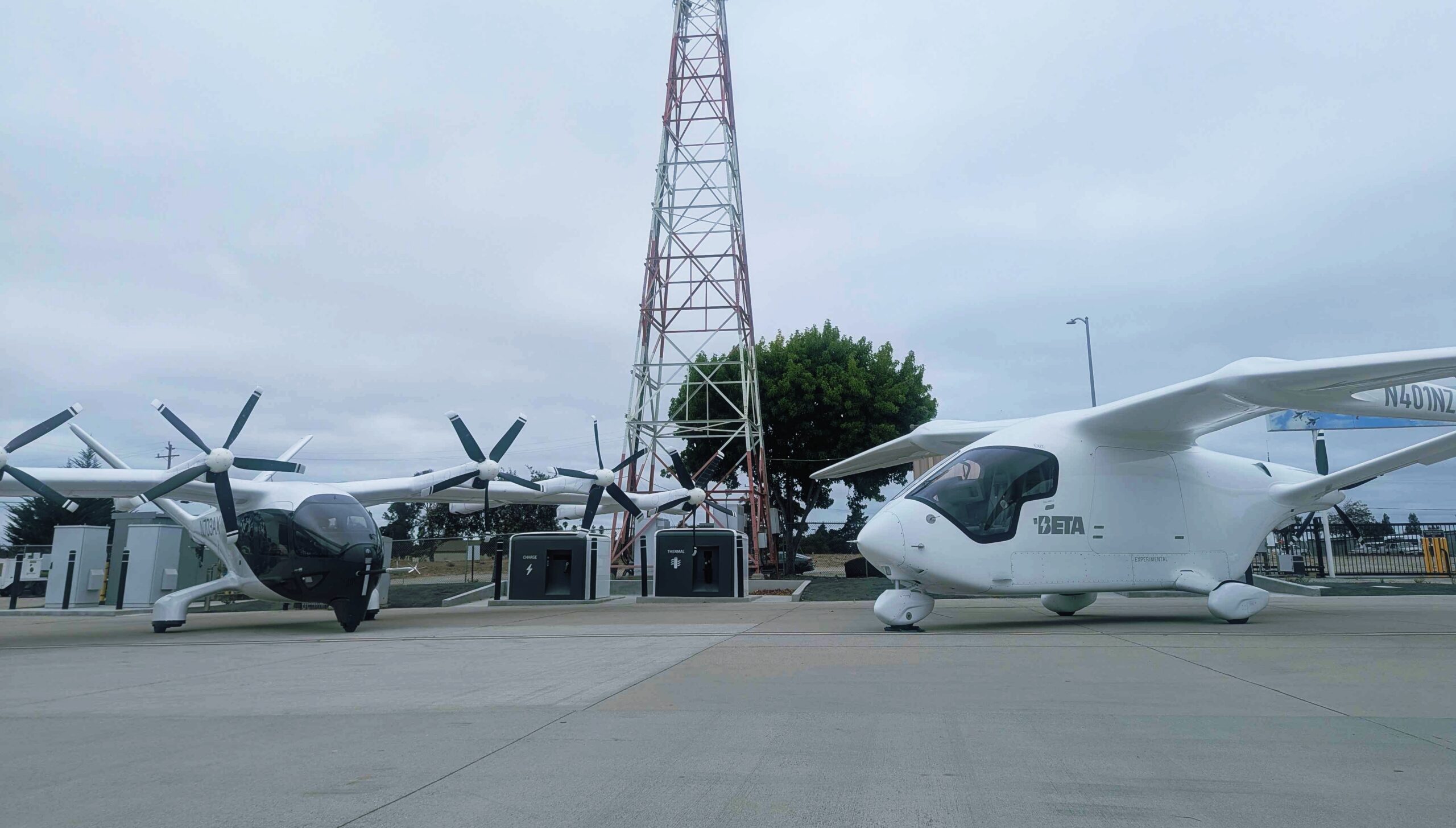
The Central Coast is a compelling place to explore that question. It’s where Joby Aviation is building the next generation of electric aircraft. It’s where Airspace Integration is developing real-world drone corridor infrastructure. It’s where DART and a broad set of industry, community and institutional partners — have been working to demonstrate that low-altitude operations can scale responsibly in complex, real-world environments. And increasingly, it’s where the workforce of the future low-altitude economy is being trained.

These visits, organized in partnership with Santa Cruz Works and UC Santa Cruz, will give the delegation firsthand exposure to the ecosystem DART and its partners are building here — and open a genuine dialogue about what the Netherlands and California can learn from each other.

Building the Workforce: MsUAS Pathways and the UCSC DUCC Project

One of the threads we’re most excited to bring into this conversation is our work on workforce development — specifically the MsUAS Pathways Project and its partnership with the UC Santa Cruz CITRIS Initiative for Drone Education and Research (CIDER).

Launched this spring with support from the James Irvine Foundation, MsUAS Pathways is DART’s two-year initiative — implemented in partnership with Hartnell College — to connect people across Monterey, Santa Cruz, and San Benito counties to real careers in drones and aerospace technology. The program aims to serve 150 participants, prepare at least 50 for FAA Part 107 commercial drone certification, and open credible pathways for people who’ve never seen themselves in this industry: farmworker families, first-generation college students, Seaside youth, military veterans.

What makes MsUAS Pathways especially meaningful is the ecosystem it’s part of.

Through a recently updated Memorandum of Understanding, DART and CITRIS Aviation have formalized how our workforce efforts work together as a unified regional strategy. The principle is simple: one regional sUAS ecosystem, two complementary investment strategies.

UC Santa Cruz CIDER’s Drones Uplifting the Central Coast (DUCC) initiative — funded by California Jobs First with nearly $3 million — provides statewide stewardship of FAA Part 107 curriculum, instructor training, and delivery coordination, reaching K–12 schools and community colleges across California. CIDER Director Rebecca Fenwick leads that work, with CITRIS Aviation Faculty Director Ricardo SanFelice anchoring the institutional partnership.

MsUAS Pathways, funded by the James Irvine Foundation, brings that curriculum into real classrooms on the Central Coast: supporting faculty at Hartnell College and Monterey Peninsula College, building adult learner pathways, and creating the kind of community-embedded implementation that a statewide program can’t always reach. Led by DART Project Lead Peter Church — a former Navy H-60 Seahawk pilot and Joby Aviation training developer — the program is designed to make sure that when the funnel opens wide, people in our communities can actually move through it.

Together, DUCC and MsUAS Pathways demonstrate something important: that curriculum at scale and community-embedded implementation aren’t competing approaches — they’re the same strategy, executed at different altitudes.

This is also a replicable model. The MOU makes that explicit: UCSC CIDER provides curriculum and coordination capacity, while trusted local partners enable community-embedded implementation. What we’re building in Monterey and Santa Cruz counties can be adapted and adopted in agricultural communities across California — and, potentially, internationally.

Growing Our CITRIS Aviation Collaboration: The Aviation Prize Competition

The DART–CITRIS relationship is deepening beyond the workforce. DART’s growing collaboration with the CITRIS Aviation program includes engagement with the CITRIS Aviation Prize Competition — a vehicle for connecting student innovation with regional and statewide challenges in the low-altitude economy. DART has been an active and engaged partner for the Aviation Prize for the past 3-years, resulting in increased academic and industry partnerships, and DART securing a key team member, Jordan King, This partnership reflects a broader commitment: to link the research and innovation capacity of UC Santa Cruz with the deployment ecosystem being built on the Central Coast.

Where Cross-Sector Collaboration Becomes Regional Strategy

The Monterey Bay Tech Hub (MBTH), launched in 2024 by DART, UC Santa Cruz, and the Monterey Bay Economic Partnership, is a cross-sector effort advancing regional technology innovation in advanced air mobility, agtech, and marine tech. Anchored by industry leaders, regional airports, higher education institutions, local governments, and community organizations, the effort has already secured over $10 million in investment from California’s Jobs First Program — funding flight test corridors, workforce apprenticeships and curriculum development. Connected through a common mission, these assets are evolving into a regional model that the state and the world can point to — a story we’re bringing to our Dutch partners on June 18 and 19, and one we welcome new partners, funders, students, and community members to join us and help continue to shape.

An Invitation

This is where we extend an invitation to you.

If you’re a student exploring careers in aviation, robotics, or agricultural technology — there’s a pathway being built for you.

If you’re an educator at a Central Coast community college or high school — we want to talk about how to bring drone and aerospace curriculum into your classrooms.

If you’re a regional business, nonprofit, or community organization with a stake in how low-altitude technology develops in our region — the Dutch delegation’s visit is an opportunity to be part of a conversation that is shaping policy and practice in California and across the Atlantic.

If you’re a funder or investor who believes that a clean, accessible, community-rooted aviation economy is worth building — there has never been more momentum behind this work, or more need for the kind of patient, aligned investment that makes it sustainable.

The June 18–19 visits to Santa Cruz and Monterey are part of a larger exchange, but they’re also a moment for our region to show what we’re building — and to hear from international peers who are building something similar. We’d love for you to be part of it.

To learn more or connect about the June 18–19 visits, the MsUAS Pathways Project, or DART’s broader work, reach out at mbdart.org or follow us on LinkedIn and social media for updates.

DART is grateful to our partners at Hartnell College, UC Santa Cruz CITRIS Aviation and CIDER, Santa Cruz Works, the James Irvine Foundation, California Jobs First, and the Coast-to-Coast Foundation for their collaboration and support in making this work possible.


Related reading:

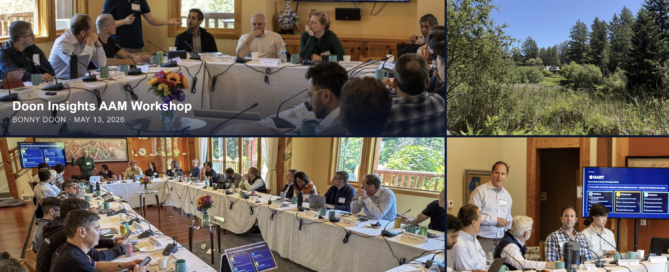
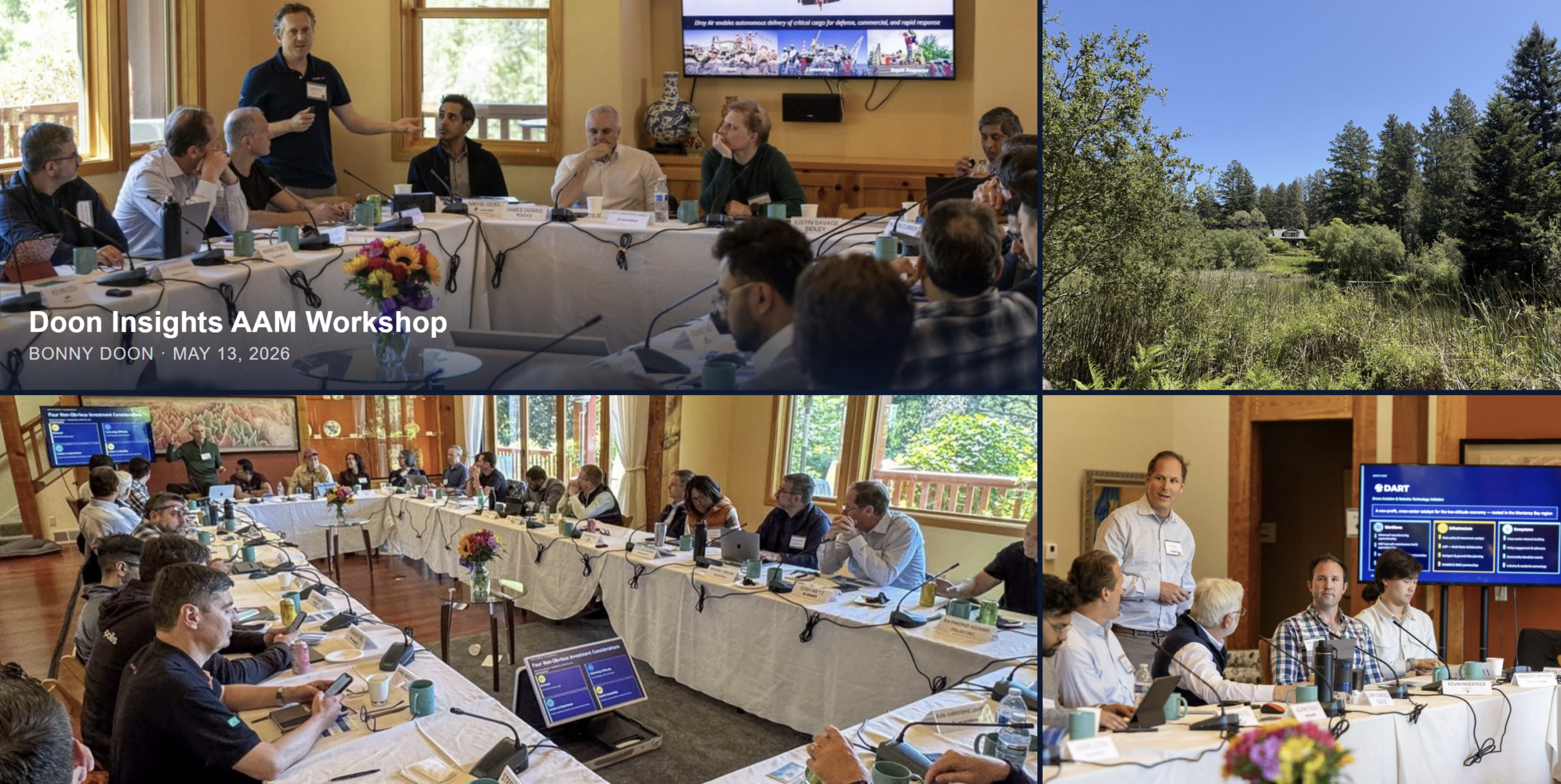
On May 13, DART Executive Director Josh Metz joined a select gathering of advanced air mobility (AAM) leaders at the Doon Insights AAM Workshop — an invitation-only convening of entrepreneurs, investors, legal strategists, and policy minds shaping the future of the low-altitude economy.

We are grateful to Howard Chao and the entire Doon Insights team for organizing and hosting what proved to be a candid, high-signal conversation across every dimension of the sector — challenges, opportunities, emerging markets, and technologies.


A Room Full of Perspective

The workshop brought together some of the most experienced voices in AAM — investors who have watched the capital cycle evolve, operators navigating certification and commercialization, legal minds working through the regulatory terrain, and policy thinkers mapping the institutional infrastructure the sector still needs to build. The range of perspectives was genuine, and the conversations were direct.

What stood out: broad recognition that the sector is moving faster than most predicted even two years ago. Aircraft are being certified. Revenue operations are beginning. The technology is arriving.

But a parallel set of questions is arriving with it — and those questions are not primarily technical.


DART’s Message: Human Infrastructure Is the Work

The most underpriced risk in AAM is not technical. It’s social.

DART carried a focused message to the workshop: the variables most likely to compress or extend timelines to scale are community trust, workforce readiness, and local political alignment — not battery chemistry or certification schedules.

These are the risks that don’t show up cleanly in a pro forma. They compound quietly — until they don’t. And unlike technical failures, you cannot iterate your way out of them in a lab.

The good news: there is a model that is working, right now, in Monterey Bay. DART’s programs across workforce development, community education, infrastructure policy, and ecosystem building offer a tested playbook for how operators, investors, and OEMs can close the gap between aircraft capability and community readiness.


What the Monterey Bay Model Shows

Open Doors Build Trust. Joby’s sustained community engagement at Marina Municipal Airport — an active public GA facility — demonstrates what transparency in practice looks like. Regular events, real engineers, direct answers to hard questions about noise and safety. That is not a PR program. It is a sustained practice that converts skeptics into stakeholders. You cannot buy that outcome; you have to earn it repeatedly over time.

Workforce Pipelines Are Political Infrastructure. DART’s advanced manufacturing apprenticeship has placed more than 100 Monterey Bay residents on pathways into the AAM sector. A new aircraft maintenance technician (AMT) apprenticeship is now underway. These programs are not charity — they are incentive architecture. When local workers and local economies have a visible stake in your growth, they show up at hearings. That is how policy gets made and how it holds.

Sustained Work Produces New Institutions. The Monterey Bay Tech Hub — launched in 2024 in partnership with UC Santa Cruz, DART, and the Monterey Bay Economic Partnership — is a direct product of this slow work. A cross-sector regional tech ecosystem spanning AAM, agtech, and the blue economy, the MBTH represents what years of relationship-building, community education, and workforce investment actually produces: new institutional infrastructure that extends the region’s capacity well beyond any single program or company.

The Cautionary Contrast. Amazon’s drone delivery launch in College Station, Texas offers the instructive counterpoint. The technology worked. The economic case was real. But community engagement infrastructure wasn’t built ahead of operations — and the friction that followed, around noise, safety, and privacy, persists years later. The lesson is simple: later is more expensive than early. Community trust compounds, in both directions.


The Four Priorities We Carried Into the Room

For the investors and operators in attendance, DART framed community engagement not as a communications function but as first-order infrastructure — and offered four practical priorities:

Fund engagement before you need it. Delayed engagement costs more, not less. This is an operations investment, not a marketing line item.

Build workforce pipelines ahead of the demand curve. The labor shortage is coming for this sector. Local hire programs are the hedge.

Design genuinely responsive feedback loops. Communities can tell the difference between a listening session and a rubber stamp. The distinction matters.

Hire for local relationship fluency. This skill set belongs on the org chart alongside technical and regulatory expertise — not as an afterthought.


The Slow Work Is a Competitive Advantage

The technology is not waiting for the community. That gap — between aircraft capability and community trust, workforce readiness, and local alignment — is the risk. The opportunity is to close it: deliberately, early, and with humility.

The Monterey Bay Tech Hub is proof that closing that gap compounds over time. What begins as workforce programming and community education becomes regional economic infrastructure — the kind that draws investment, anchors policy, and makes an entire sector more durable.

The slow work is not a soft consideration. It is the competitive advantage.

DART will continue doing that work in the Monterey Bay region and beyond. We are grateful for opportunities like the Doon Insights workshop that put these conversations at the table where capital, policy, and operations intersect.

Learn more about DART’s workforce, infrastructure, and ecosystem programs at mbdart.org.

A new chapter in Monterey Bay’s aviation workforce story is underway.

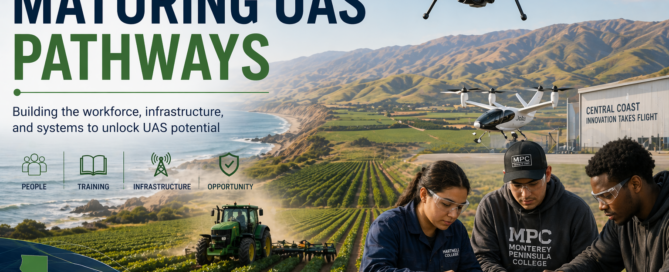
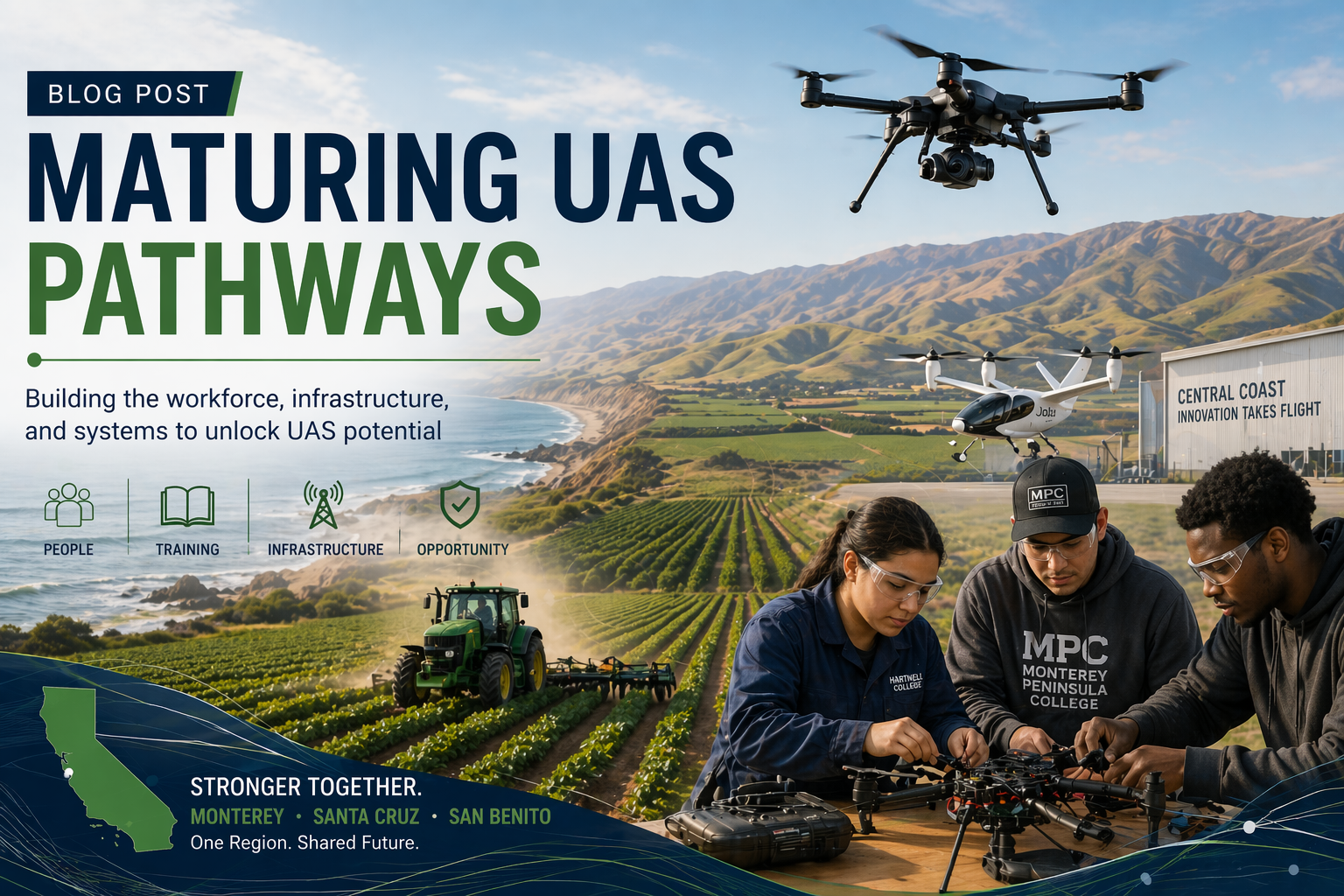
Monterey Bay DART, in partnership with Hartnell College, is implementing the Maturing Regional AgTech and Aerospace Job Readiness Pathways program, known as MsUAS Pathways, a two-year initiative made possible by a grant from the James Irvine Foundation. The program is designed to do something deceptively straightforward: connect people in our region to real, well-paying careers in drones and aerospace technology, including residents who’ve never seen themselves reflected in this industry before.

MsUAS Pathways is the community-embedded implementation arm of a broader regional sUAS workforce ecosystem that DART is building alongside UC Santa Cruz’s CITRIS Initiative for Drone Education and Research (CIDER). Under a recently amended Memorandum of Understanding, MsUAS Pathways and CIDER’s Drones Uplifting the Central Coast (DUCC) initiative now function as complementary components of a single regional strategy — what we and our CIDER partners describe as “a regional sUAS ecosystem, two complementary investment strategies.”

What Is MsUAS Pathways?

The drone industry is growing fast. From agricultural monitoring in the Salinas Valley to advanced air mobility operations emerging in Marina and beyond, employers across our region are actively looking for workers with technical training and FAA credentials. But for many community members — first-generation college students, farmworker families, residents of Seaside, and military veterans, the path into these careers has been unclear, if visible at all.

MsUAS Pathways is built to change that.

Over the next two years, the program aims to serve 150 participants across Monterey, Santa Cruz, and San Benito counties, preparing at least 50 individuals to earn FAA Part 107 certification, the core commercial drone credential, while building durable pathways into aerospace careers.

How It Works: Five Workstreams, One Regional Vision

The program works across five coordinated areas:

  1. Community College Drone Education. DART and Hartnell College are developing a standalone Part 107 certification course, built around CIDER’s publicly available FAA Part 107 curriculum, and integrating drone curriculum into existing STEM and agricultural technology programs. Faculty training is underway, with the first student cohort set to launch this summer. Monterey Peninsula College (MPC) is also part of this effort, with a drone pathway pilot planned for the Seaside and Marina campuses.
  2. Community-Based Pathways in Seaside. In partnership with the Monterey County Black Caucus (MCBC) and local schools, the program is creating accessible entry points for Seaside youth and adults who face the greatest barriers to high-growth technical careers. Community workshops, outreach, and wraparound student support are central to this effort.
  3. Veteran & Military-Connected Pathways. The Monterey Bay region is home to the Naval Postgraduate School, the Defense Language Institute, and a significant veterans community, yet military-to-civilian career transitions in aerospace remain frustratingly fragmented. MsUAS Pathways is working with local veteran-serving organizations to map military skills to FAA certifications and create a clear, supportive transition pathway.
  4. Employer Engagement. Workforce training only works if it connects to real jobs. The program is building active relationships with employers across aerospace, agriculture, construction, public safety, and advanced air mobility, including companies like Joby Aviation, to ensure students move from training into employment.
  5. Coordination, Evaluation, and Sustainability. DART is investing in the infrastructure needed to make this work last: program coordination, regular reporting, and a sustainability plan designed to secure long-term funding through state workforce programs and employer partnerships after the grant period ends.

Leading the Work: Peter Church

DART welcomed Peter Church as MsUAS Project Lead in January 2026. A former U.S. Navy H-60 Seahawk pilot, Naval Academy flight instructor, and Joby Aviation training developer, Peter brings exactly the kind of cross-sector experience this program requires: deep aviation expertise, a commitment to education, and firsthand understanding of what military-to-civilian transitions actually look like.

“This program will create great opportunities and community-based on-ramps to a growing industry,” Peter said when he joined the team. “We can’t wait to connect people to quality training and meaningful careers in UAS operations.”

Part of an Integrated Regional sUAS Ecosystem: DART & UC Santa Cruz CIDER

MsUAS Pathways doesn’t stand alone. It operates as one half of a coordinated, two-part regional strategy with our longtime partner, the UC Santa Cruz CITRIS Initiative for Drone Education and Research (CIDER) — a program under CITRIS Aviation, led by Faculty Director Ricardo SanFelice, with CIDER Director Rebecca Fenwick leading the initiative’s drone education work.

Through its Drones Uplifting the Central Coast (DUCC) initiative, funded by California Jobs First, CIDER provides statewide stewardship of FAA Part 107 curriculum, instructor training, and delivery-coordination capacity, expanding access across K–12 systems and community colleges throughout California. MsUAS Pathways, supported by the James Irvine Foundation, focuses on community-embedded adoption within the Central Coast: bringing CIDER’s curriculum into Hartnell College and Monterey Peninsula College, supporting faculty development, and opening direct on-ramps for adult learners, veterans, and community-based organizations.

As the partnership’s shared attribution language puts it: “The Maturing sUAS Pathways Project enables CIDER’s publicly available Part 107 curriculum by supporting its local adoption, instructional use, and integration within select Central Coast community colleges.”

Put more simply: DUCC widens the funnel statewide; MsUAS Pathways ensures institutional adoption and learner progression through it at home. Hartnell College and Monterey Peninsula College serve as the integrating backbone where these two investments meet — so learners experience one coherent pathway rather than parallel programs.

This partnership builds on years of shared work, including the 2021 Drone-Forestry Career Pathways Report and video, the 2023 Emerging Technology Workforce Skills Demand Study, and Drone Camp programming from 2020 through 2025. Together, DART and CIDER are demonstrating a replicable statewide model: CIDER provides curriculum and coordination at scale, while trusted local partners like DART drive community-embedded implementation.

Why This Matters for Our Region

MsUAS Pathways doesn’t exist in isolation. It’s part of a layered regional system that DART and its partners have been building for years — from the RV-12 Airplane Build Lab at Pajaro Valley High School, to the Aircraft Maintenance Technician Apprenticeship at Joby Aviation, to drone curriculum stewarded through UC Santa Cruz’s CITRIS Institute for Drone Education and Research (CIDER) and scaled statewide through the DUCC initiative. MsUAS Pathways extends this ecosystem further, adding new community-facing entry points and a dedicated veteran pathway.

The goal isn’t just to train workers. It’s to make the Monterey Bay region a place where anyone, regardless of background, income, or prior exposure to aviation, can find a credible on-ramp to a career in one of the most exciting and fastest-growing sectors of our economy.

We’re grateful to the James Irvine Foundation for making MsUAS Pathways possible, and to California Jobs First for enabling CIDER’s companion DUCC investment. Our thanks also go to our partners at Hartnell College, Monterey Peninsula College, the Monterey County Black Caucus, UC Santa Cruz CITRIS Aviation and CIDER, including CIDER Director Rebecca Fenwick, for bringing this work to life.

Stay tuned for updates as cohorts launch, partnerships deepen, and community members take their first steps toward the runway.

To learn more about DART’s workforce programs, visit mbdart.org/programs/workforce-development.

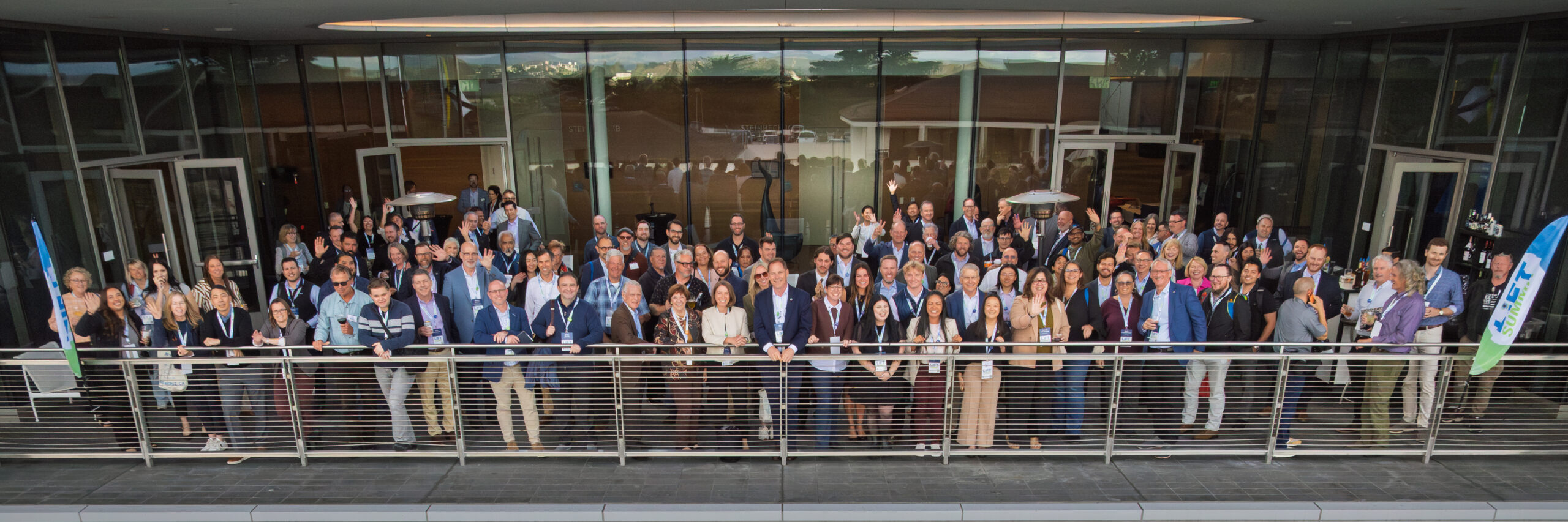
US aviation industry leaders, policymakers, educators, and innovators will gather in Monterey, CA, March 31–April 2 for the LIFT Summit, the state’s premier forum for collaboration across the low-altitude economy. Hosted by Monterey Bay DART, the annual event focuses on the future of advanced air mobility (AAM) and uncrewed aerial systems (UAS). 

The summit takes place at the Monterey Conference Center, with an opening reception at the Monterey Jet Center, bus tours and live flight demonstrations at Airspace Integration UAS Test Range, La Selva Beach and Marina Municipal Airport. 

Summit participants include technology developers, airport and transportation leaders, government representatives, defense partners, educational institutions, and economic development organizations. 

Key presenters and panelists include:

Over three days, the event spotlights initiatives and technologies shaping the next generation of aviation. Attendees have the unique opportunity to interact with forerunners in aerial innovation. For a complete conference agenda visit the Summit website.

Event schedule highlights include:

Hosted at the Monterey Jet Center, this reception offers sponsors, speakers, and VIP guests exclusive access to industry executives and aviation pioneers.

A full-day immersive experience featuring airfield tours and live flight demonstrations from leading AAM and UAS companies. 

Two days of keynote presentations, expert panels, and workshops addressing workforce readiness, infrastructure, policy frameworks, airspace integration, and economic growth in the low-altitude economy.

A high-level networking event connecting industry leaders, government officials, educators, and innovators.

“The summit emphasizes implementation,” said Josh Metz, DART Executive Director. “When industry, education, and government align around concrete next steps, we move beyond discussion and drive measurable progress for advanced air mobility in California and the nation.”

As advanced air mobility continues to gain momentum nationwide, the LIFT Summit underscores Monterey Bay’s growing role as a hub for next-generation aviation, promoting  innovation, testing, and partnership.

For more information about the LIFT Summit, including registration and sponsorship opportunities, visit www.mbdart.org/summit

The U.S. Department of Transportation has released its long-anticipated Advanced Air Mobility (AAM) National Strategy, marking an important milestone in aligning federal, state, and local efforts to responsibly integrate next-generation aircraft into the national airspace system. State aviation officials, through the National Association of State Aviation Officials (NASAO), have welcomed the strategy as a critical framework for collaboration, safety, workforce readiness, and infrastructure planning.

For Drone, Aviation & Robotics Technology (DART), the Strategy strongly validates the integrated, region-first approach we have been advancing across Workforce, Infrastructure, and Ecosystem development.

Workforce: Preparing People for the AAM Era

The National Strategy emphasizes that AAM success depends on a skilled, inclusive workforce—spanning pilots, technicians, operators, planners, and data specialists. This directly aligns with DART’s workforce initiatives, which focus on building accessible, career-connected pathways into advanced aviation and autonomy, particularly for historically underserved communities. Our programs are designed to ensure that emerging AAM opportunities translate into family-sustaining jobs and long-term regional prosperity.

Infrastructure: Planning Before the Aircraft Arrive

USDOT and state aviation leaders underscore the importance of early infrastructure planning—airspace integration, ground facilities, charging and energy systems, and community-compatible siting. DART’s infrastructure work reflects this guidance, supporting public agencies as they evaluate vertiports, test sites, and multimodal integration strategies that are safe, scalable, and aligned with regional transportation goals.

Ecosystem: Coordinated, State-Enabled Innovation

A central theme of the Strategy—and the accompanying NASAO response—is the essential role states play as conveners and integrators between federal policy, local communities, and industry. DART’s ecosystem-building model mirrors this logic: creating trusted spaces where public agencies, universities, industry partners, and community organizations can coordinate rather than compete.

This approach is currently taking shape through DART’s ongoing collaboration with Caltrans Division of Aeronautics, University of California, Berkeley, and the American Air Advantage Consortium to advance a competitive proposal under the FAA’s eVTOL Integration Pilot Program (eIPP). Together, we are demonstrating how state-enabled, regionally grounded partnerships can help the FAA test, learn, and scale AAM integration in ways that are operationally realistic and publicly accountable.

Why This Matters

As NASAO notes, the National AAM Strategy affirms that AAM will not be deployed by industry alone—it will succeed only through close coordination with state aviation agencies, transportation departments, and regional partners who understand local conditions and public priorities. DART is proud to be part of this emerging national alignment, translating federal vision into practical, place-based action here on the Central Coast and beyond.

We look forward to continuing this work with our partners and sharing updates as the eIPP process advances.

On October 28, 2025, Monterey Bay DART, Joby Aviation, and Airspace Integration hosted a high-level California–Netherlands–EU delegation for the CA–NL–EU Innovative Mobility Tour, marking a major milestone in ongoing international collaboration around advanced air mobility (AAM), clean transportation, and climate innovation.

The visit—coordinated with the Governor’s Office of Land Use & Climate Innovation (LCI) and following the California–Netherlands Climate & Mobility Innovation Exchange held earlier this year—brought together leaders from state agencies, academia, industry, and tribal nations. Participants included representatives from CalSTA, Caltrans, CCTA, TAMC, the European Commission, the Netherlands Consulate, Blue Lake Rancheria, and the University of California, Santa Cruz, along with counterparts from the Province of North Holland, Ministry of Infrastructure and Water Management, and Stenden University.

🌉 From Amsterdam to Marina to Watsonville: Bridging Innovation Corridors

The delegation began the day at Joby Aviation’s Marina campus, where they toured the company’s next-generation electric aircraft manufacturing facility. Guided by DART’s Cody Cleverly, participants observed firsthand how Joby’s scalable training pathways, advanced manufacturing processes, and safety systems are positioning California as a global leader in sustainable aviation.

At Airspace Integration’s coastal test range in La Selva Beach, Chris Bley and the DART team introduced the group to real-world demonstrations of airspace integration and corridor enablement—core to building the California Advanced Air Mobility Corridor Initiative (CAAMCI). Discussions focused on workforce development, airport readiness, regulatory harmonization, and data-sharing frameworks for statewide replication.

🤝 From Dialogue to Action

As LCI Director Samuel Assefa noted, the tour represented a tangible follow-up to August’s California–Netherlands Innovation Mission, where DART joined California leaders in the Netherlands to launch the Transatlantic Agreement on Air Mobility (2025–2028).

That landmark agreement—signed by DART, METIP, CCTA, Electric Flying Connection, and the Coast-to-Coast Foundation—commits partners to joint projects, knowledge exchange, and workforce collaboration between California and Dutch counterparts.

“By connecting California’s innovation ecosystem with our Dutch counterparts,” said Josh Metz, DART Executive Director, “we’re moving from dialogue to action—building the shared infrastructure, workforce, and governance models needed for a climate-smart, inclusive future of flight.”

🌎 Strengthening Global Collaboration

The October tour deepened partnerships across sectors and continents—uniting agencies like CalSTA, Caltrans, CCTA, and TAMC with international peers under a shared vision for clean aviation and resilient infrastructure. Discussions emphasized dual-use aerospace technologies that advance both civil resilience and defense readiness, while reinforcing the role of regional ecosystems like the Monterey Bay in California’s innovation landscape.

🚀 Looking Ahead

This collaboration will continue into 2026 with reciprocal visits, policy pilots, and shared research between California and the Netherlands. DART will also bring these international insights home through convenings like the 2026 LIFT Summit in Monterey, which will showcase global perspectives on the future of flight, workforce innovation, and sustainable mobility.

Together, partners are charting a course toward a cleaner, smarter, and more connected world—one reflected in the shared flags flying at the tour’s close: California, the United States, the Netherlands, the European Union, and the Earth.

📸 Photo Caption:
Delegation members from California, the Netherlands, and the EU gather at Joby Aviation’s Marina facility during the DART–Joby–LCI Tour, continuing the transatlantic collaboration launched during the August Climate & Mobility Innovation Exchange.

DART Joins Inaugural CAAT Consortium Meeting to Advance National AAM Infrastructure Strategy

Monterey Bay DART proudly participated in the inaugural Center for Advanced Aviation Technology (CAAT) Consortium meeting held September 29–30, 2025, at Burnett Plaza in Fort Worth, Texas. The two-day session—organized by Texas A&M University–Corpus Christi’s Autonomy Research Institute (ARI)—marked a major milestone in shaping a national research and policy framework for Advanced Air Mobility (AAM) and next-generation aviation systems.


Building on relationships established earlier this summer, when CAAT Executive Director Col. (ret) Mike Sanders joined DART for a multi-day California visit and collaboration session at NASA Ames, Joby Aviation, Airspace Integration, and the Berkeley Space Center, DART joined fellow leaders from across the public, private, and academic sectors to formally launch the CAAT Infrastructure Working Group.


DART Executive Director Josh Metz was joined by Patrick Gould of Skyway and Rick Scholte of Sorama in representing California’s  (and the Netherlands) emerging low-altitude economy ecosystems. Together, they contributed to the Infrastructure Working Group’s formation and White Paper Series strategy, which will guide the development of frameworks and policy recommendations around energy, digital systems, workforce, community acceptance, and infrastructure standards.

“CAAT provides a vital national platform to align research, policy, and infrastructure planning for the future of advanced aviation,” said Metz. “DART is honored to be among the founding CAAT Consortium members helping shape this next chapter in aviation history.”

The meeting also featured valuable discussions with federal and regional leaders, including Earnest Huffman (North Central Texas Council of Governments), James Grimsley (Choctaw Nation), and the Texas A&M Autonomy Research Institute team.

Through this collaboration, DART became an official member of the CAAT Consortium and will contribute to the Infrastructure Working Group’s upcoming White Paper Series (2025–2026)—a national effort to define the physical, digital, and community foundations of AAM deployment.

Special thanks to Col. (ret) Mike Sanders and his team for hosting such a productive and forward-looking session. We look forward to hearing more from Mike and the CAAT leadership team at the 2026 LIFT Summit in Monterey, California.

Photo Highlights:
(Images from the Inaugural CAAT Consortium Meeting – Fort Worth, TX, Sept 2025 and from Director Michael Sanders visit to Silicon Valley and the Monterey Bay region)

Defining the “Low Altitude Economy”: How DART is Catalyzing California’s Next Great Innovation Frontier

Across the Central Coast and beyond, a new layer of economic activity is emerging—one that exists between the ground and 5,000 feet above it. This space, often referred to as the “low altitude economy,” represents one of the most dynamic frontiers of innovation and investment in California today. From uncrewed aerial systems (UAS) and advanced air mobility (AAM) to automated agriculture, robotics, and digital infrastructure, the low altitude economy is transforming how communities connect, produce, and thrive.

What Is the Low Altitude Economy?

The low altitude economy encompasses the technologies, infrastructure, workforce, and policies that enable sustainable, intelligent operations within near-earth airspace. This includes:

  • Advanced Air Mobility (AAM) — electric and autonomous aircraft systems providing new passenger and cargo services between communities;
  • Uncrewed Aerial Systems (UAS) — drones delivering agricultural insights, mapping data, and public-safety support;
  • Automation and Robotics — technologies that extend precision, safety, and efficiency from farms and factories into the sky;
  • Digital and Energy Infrastructure — advanced communications, navigation, and clean-power systems that support the safe integration of aerial and ground-based innovation.

Collectively, these sectors form an ecosystem that will generate thousands of high-wage jobs, enable faster and cleaner mobility, and expand economic opportunity in both urban and rural regions.

Why “Low Altitude” Fits DART’s Focus

DART (Drones, Aviation and Robotics Technology) has been advancing the low altitude economy since its founding. DART’s sector focus sits squarely at the intersection of aviation, automation, and community development—bridging the innovation happening at local airports, educational institutions, and technology firms with the needs of local governments and regional workforce systems.

Through partnerships with OEMs, state and regional partners, DART is helping shape real-world demonstrations of eVTOL passenger and cargo services, vertiport network plans, flight-testing corridors, and airport readiness strategies. Together, we’re helping define and deploy the next generation of California’s advanced air mobility infrastructure.

Meanwhile, DART’s workforce programs—such as the DART-Joby Advanced Manufacturing Apprenticeship Program, Aircraft Maintenance Technician Apprenticeship, and DART-PVUSD RV-12 Airplane Build Lab —are training the next generation of technicians and operators needed to sustain this rapidly growing ecosystem.

A Platform for Inclusive Prosperity

Defining and developing the low altitude economy isn’t just about advanced aircraft—it’s about people, place, and purpose. DART’s work ensures that this next generation of innovation creates equitable access to high-quality jobs, supports resilient local supply chains, and strengthens community well-being across the Central Coast.

By convening industry, education, and public partners through events like the LIFT Summit, and regional working groups, DART is helping to establish California’s Central Coast as a global leader in low altitude innovation—an economy that connects the sky to the ground, and technology to opportunity.

Learn More

To explore how DART and its partners are building the low altitude economy, visit MBDART.org and follow us on LinkedIn.

Background
On September 12, 2025 U.S. Transportation Secretary Sean P. Duffy announced a new pilot program within the Federal Aviation Administration (FAA) to accelerate the deployment of advanced air mobility (AAM) vehicles. Program details were published in the Federal Register, and the FAA has posted a Request for Proposals (RFP)/Screening Information Request (SIR) 697DCK-25-R-00445 on sam.gov.

Purpose
The eIPP was established under Executive Order 14307 (June 2025) to accelerate the deployment of safe and lawful electric vertical takeoff and landing (eVTOL) and other Advanced Air Mobility (AAM) operations in the United States. It is intended to generate data, lessons learned, and policy insights to shape national regulations while demonstrating the viability and benefits of these technologies.

Program Administration

Key Features

Program Goals

Example Use Cases

Proposal Requirements (due Dec 11, 2025, 3 PM ET, via the eIPP portal)

Evaluation Criteria

  1. U.S.-based aircraft & technology (required).
  2. Economic & geographic representation; strength of partnership model (high importance).
  3. Operations scope, diversity, and technical/operational detail (high).
  4. Policy/regulatory insight potential (high).
  5. Aircraft & operational readiness (medium).
  6. Support for operations (medium).

What This Means for Participants

Last week’s announcement of the $7.4M California Jobs First Regional Investment Initiative award to establish the California Advanced Air Mobility Corridors Initiative (CAAMCI) was more than just a win for the Central Coast region. It was the culmination of decades of vision, persistence, and collaboration that began long before “advanced air mobility” was a commonly used phrase.

I want to take a (few) moments to reflect on and celebrate the many DART-relevant* milestones, which along with broad collaboration with our many partners and collaborators over our 8-year history, brought us to this moment. I hope this timeline provides inspiration for other economic development practitioners working on complex, multi-partner initiatives. Making progress on these programs takes dedication, resources, skillful navigation, partnership and sometimes many years to realize. 

As this next chapter unfolds involving the CAAMCI Award, the recently announced FAA eVTOL Integration Pilot Program (eIPP), and the energized cross-sector (Industry, Government, Education & Community) partners, DART stands ready to support these exciting endeavors for the benefit of the Monterey Bay and Central Coast Regions, The State of California, and the Nation. Onward! 

*While we made every effort to capture the milestones we felt most relevant to DARTs history, and contributions to the current moment, inevitably there will be those that we inadvertently missed, or left for other histories to be told. Feel free to reach out in the event you (the reader) have a  particular milestone you feel should be represented. 

From Fort Ord to New Futures (1994–2015)

Early Innovation Seeds (2015–2021)

State & Federal Alignment (2021–2023)

Building Workforce & Ecosystem Capacity (2022–2025)

Culmination (2025)

Looking back, the through-line is clear: a community willing to invest, collaborate, and adapt, guided by a belief that the Central Coast can lead in climate-smart aerospace innovation.

This is not the finish line. It’s the foundation for what comes next: expanding opportunities, scaling workforce programs, building vertiport infrastructure, and ensuring this future is inclusive for all.

A heartfelt thank you to our many partners—FORA alumni, MBEP, MBTH, UCSC, CITRIS, CIDER, Joby, PVUSD, Skyway, the Irvine Foundation, Hartnell College, Mujeres en Acción, COPA, Monterey Black Caucus, our local airports, the Uplift Central Coast Coalition, and state/federal allies—who made this journey possible.

Onward!