Ten Days, Four Regions, One Shared Direction: What the California × Netherlands 2026 Exchange Left Behind
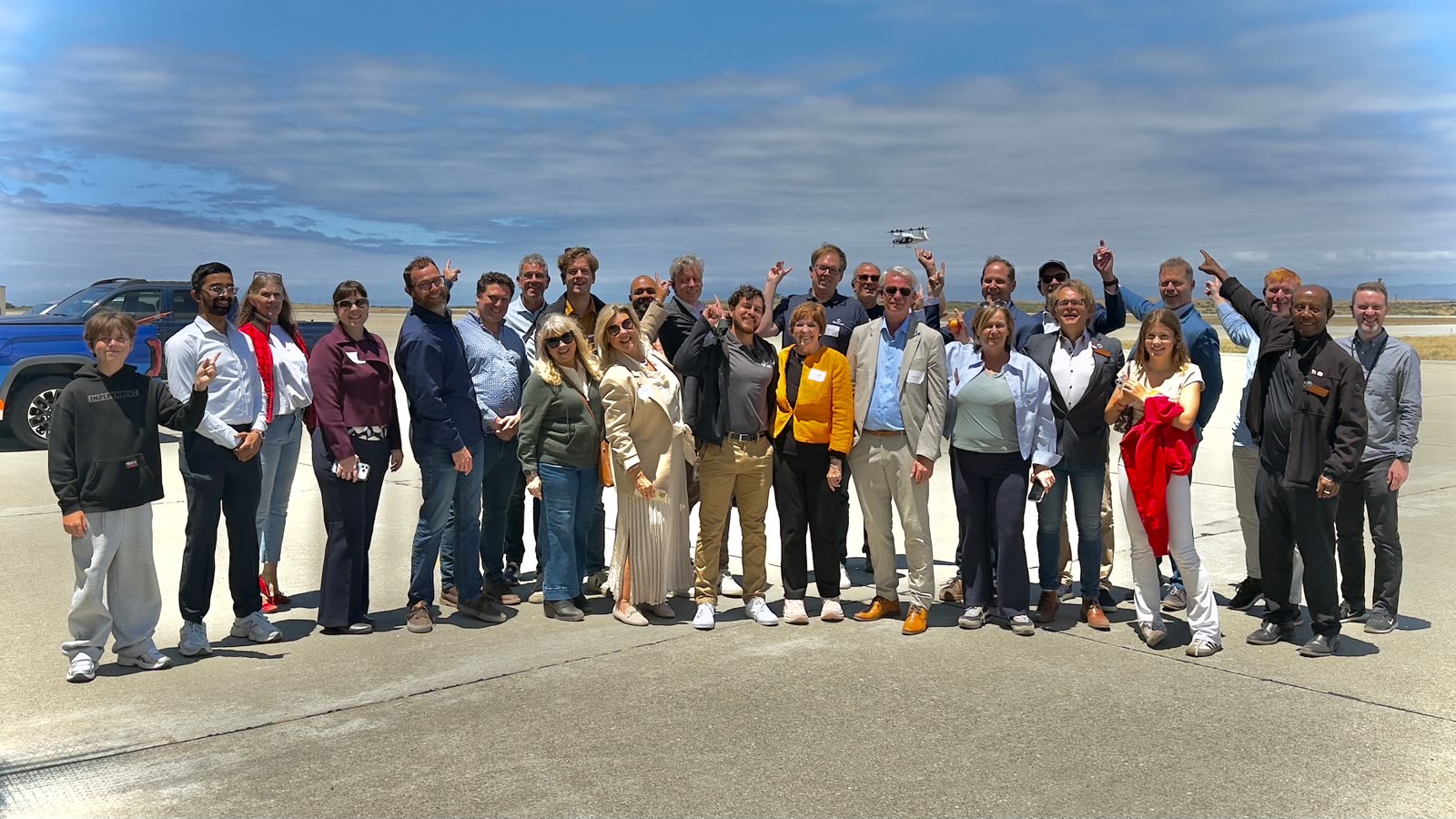
Three weeks ago, we wrote that something unusual was about to happen on the Central Coast — that a delegation of Dutch and California policymakers, entrepreneurs, researchers, and innovators was on its way, and that DART would be hosting them as part of the California × Netherlands 2026 Exchange (Photo credit @meditarianallc).
They came. And now that the dust has settled on ten days, four regions, and more conversations than any of us can count, it’s worth saying plainly what this was: not a conference, not a showcase, but a genuine working exchange between people trying to solve the same problems on opposite sides of the Atlantic.
This is the story of those ten days — and of one moment in particular, on a Thursday at NASA Ames, that turned years of dialogue into a signature on paper.
The Arc of the Week
The exchange was built around a single question that both regions are living: what does it actually take to move from pilot project to real-world deployment?
To explore it, the delegation moved through four distinct slices of California’s mobility ecosystem, each reflecting a different layer of the system:
- Sacramento — policy and statewide strategy
- Bay Area / Northern California — research, innovation, and systems integration
- Central Coast — test sites, live demonstrations, and workforce development
- Southern California — infrastructure, ports, and market scale
The design principle, as the tour brief put it, was candor over polish. Both delegations came to learn, to share lessons honestly — successes and challenges — and to build the kind of relationships that outlast a single week.
Before the Work: A Welcome Worth Remembering
Fittingly, the exchange didn’t begin with an agenda item. It began with a match.
On Sunday, June 14, the delegation gathered in San Francisco for a World Cup watch party — the Netherlands against Japan — the kind of shared, slightly raucous, entirely human start that sets the tone for everything that follows. There’s no better icebreaker for a transatlantic group than a national team on the screen.
From there, the group headed north to Napa Valley for a Welcome Reception hosted by Dan Phillips and John Ballard of Lost Coast Ventures, together with the Blue Lake Rancheria — a warm evening that turned a roster of names into a cohort of colleagues before the formal program ever started.
It was here that Blue Lake Rancheria Tribal Chairman Jason Ramos welcomed the delegation — a welcome that carried real weight, given the Tribe’s leadership in clean energy resilience and its role as an anticipated partner in the work ahead. Chairman Ramos went on to participate in the Sacramento meetings, lending a Tribal sovereignty and energy-resilience perspective to the policy conversations from day one.
Sacramento: Setting the Policy Foundation
With the group already acquainted, the formal week opened in Sacramento with the Climate, Mobility, and Energy Forum at the May Lee State Office Building — a full morning of state leadership setting the context for everything that followed.
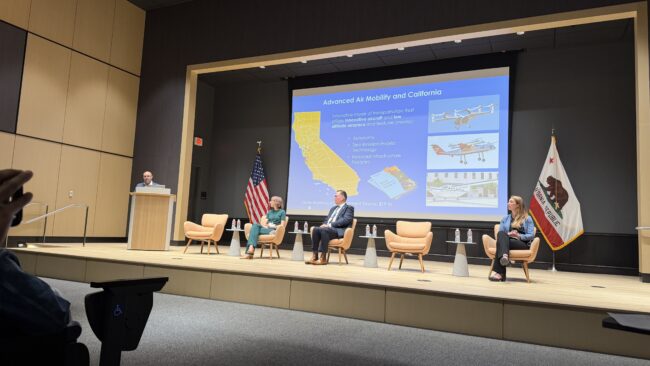
Caltrans Division of Aeronautics Chief Tarek Tabshouri briefs the group on California’s Advanced Air Mobility policy actions.
Opening keynotes came from the Governors Office of Landuse and Climate Innovation (LCI) Director Sam Assefa and California Energy Commissioner Noemí Otilia Osuna Gallardo. King’s Commissioner Arthur van Dijk offered a recognition speech, and Deputy Consul General Agnes Koppleman spoke in support. The morning moved through California’s Fifth Climate Assessment, air mobility, smart mobility, and complete-streets work from Caltrans leadership, then turned to Caltrans UAS operations and the state’s clean energy transition.
The afternoon was where the real work began: speed matchmaking between state representatives, delegation members, policymakers, and innovators — the first of many sessions designed to turn proximity into partnership. The day closed with a hosted reception by the Contra Costa Transportation Authority (CCTA).
The Bay Area: Where Research Meets Airspace — and the LOI Gets Signed
Days two and three carried the delegation into the Redefining Mobility Summit with CCTA, where policy met innovation across conference sessions, matchmaking, and technology demonstrations — including visits with Elroy Air and Glydways, plus STEM engagement connecting students to the field.
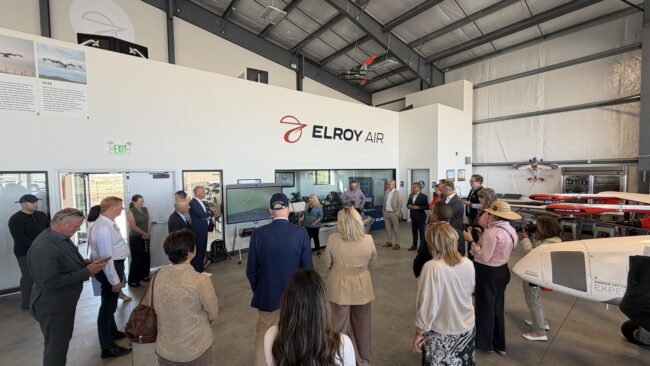
Welcome at Elroy Air development site at Byron Airport.
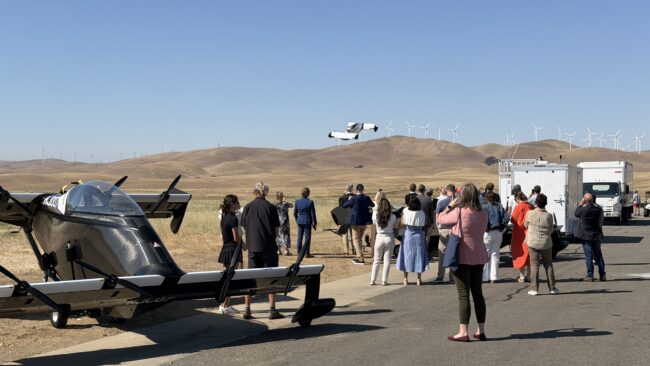
Viewing a flight demonstration by Pivotal at the Byron Airport.
Then came Thursday, June 18 — and the heart of the Bay Area segment.
The delegation spent the day immersed in air mobility research at the institutions defining the field. At NASA Ames, the Aviation Systems Division walked the group through the research and simulation environments where airspace integration is being worked out — 180 staff, real NASA projects, and the path from concepts to field deployment.
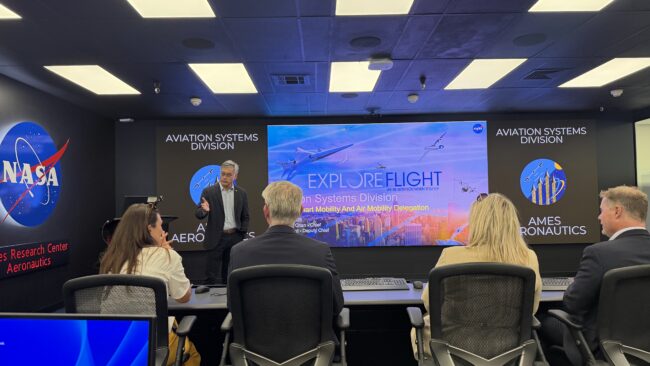
Inside NASA Ames: the Aviation Systems Division on moving concepts from simulation to the field.
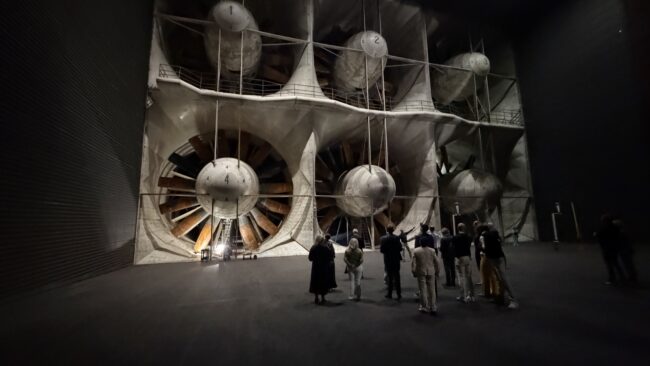
Scale you can feel: touring the wind tunnel facilities at NASA Ames.
And it was at NASA Ames, on that same day, that years of transatlantic relationship-building became something concrete.
DART, Den Helder Airport, and the Coast to Coast Foundation signed a Letter of Intent on Smart Air Mobility Cooperation. Signed by DART, by Ellen Hiep on behalf of Coast to Coast, and by Conny van den Hoff on behalf of Den Helder Airport, the LOI was witnessed by a remarkable group: NASA Ames Director Dr. Eugene Tu, King’s Commissioner Arthur van Dijk, Regional Mobility Minister Jeroen Olthof, Consul General Agnes Koppelman, and LCI Director Sam Assefa.
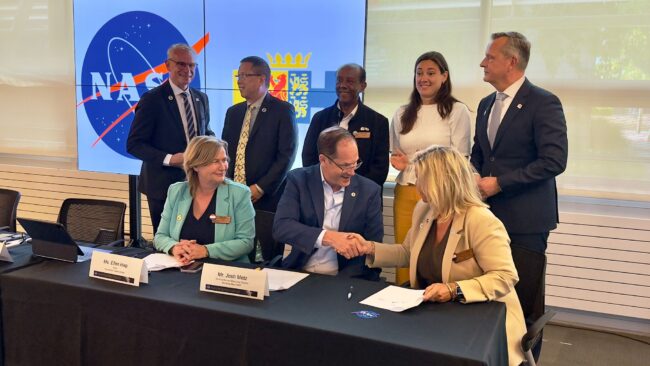
Signed at NASA Ames, June 18, 2026: DART, Den Helder Airport, and Coast to Coast commit to building toward a formal agreement. Photo credit @meditaraniallc.
The intent is to develop a full Memorandum of Understanding — ideally to be presented in April 2027 during the Drive Forward Mission to the Netherlands. The collaboration areas read like a map of where this sector is actually headed: AAM and UAS use cases for North Sea offshore and wind-farm logistics, Beyond Visual Line of Sight (BVLOS) operations, vertiport and ground-infrastructure planning including charging for electric aircraft, regulatory harmonization across aviation authorities, and workforce development spanning both ecosystems.
What makes the partnership compelling is the complementarity. DART has grown into an ambassador for Smart Air Mobility integration on the U.S. West Coast; Den Helder Airport has become a leading “living lab” for the same work in Western Europe, with a real-world offshore deployment environment in the North Sea; and Coast to Coast has been the connector between California and the Netherlands since 2012. The LOI also opens the door for the Maritime Cluster Den Helder, Blue Lake Rancheria, CAMI, and CCTA to join the eventual MOU.
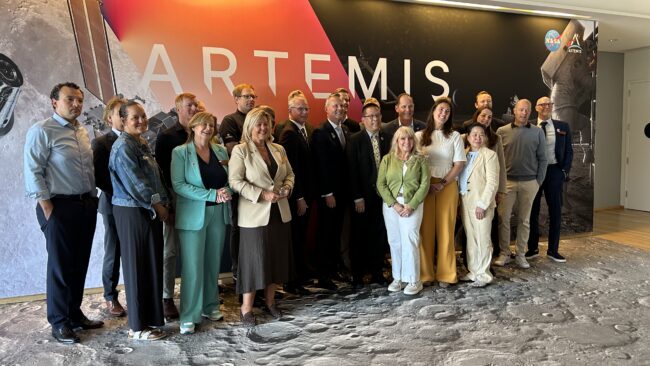
A transatlantic cohort, grounded in shared ambition — at NASA Ames. Photo credit @meditaraniallc.
It was, in every sense, the moment the week had been building toward. But it landed precisely because of what came next: the chance to show our Dutch partners the ecosystem these commitments are meant to serve.
The Central Coast: From Testing to Deployment
This is home. And June 18–19 was our chance to put the Central Coast’s piece of the answer in front of the delegation.
After arriving for dinner and an overnight at Chaminade in Santa Cruz, the group turned to the question that animates DART’s work: how do low-altitude operations scale responsibly in complex, real-world environments?
The answer took shape across a day of live environments. At Airspace Integration, the delegation saw where systems get tested well beyond the lab. They walked through hangars housing real uncrewed aircraft and got a firsthand look at the operational side of the low-altitude economy.
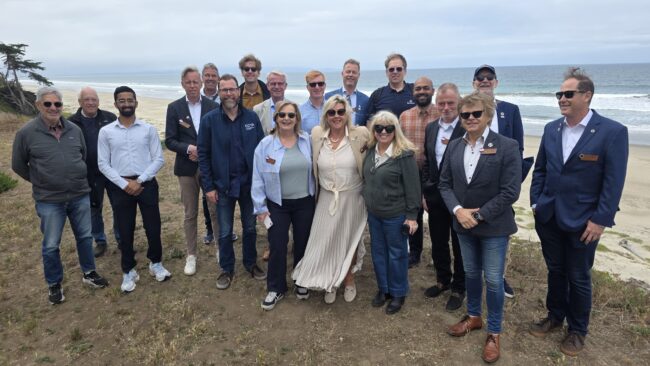
Airspace Integration: where systems move from the lab into live environments. Photo credit @meditaraniallc.
And then there were the demonstrations. There’s a particular kind of quiet that falls over a group when an electric aircraft lifts off in front of them for the first time — and this delegation got to feel it more than once.
Woven through all of it was the workforce story — the MsUAS Pathways Project with Hartnell College, the partnership with UC Santa Cruz’s CITRIS Aviation and CIDER programs, and the Monterey Bay Tech Hub — the talent pipelines being built alongside the technology, so that when this economy scales, people in our communities can move through it.
Not every highlight was on the flight line. Thanks to the Monterey Jet Center, the delegation also took an afternoon at WeatherTech Raceway Laguna Seca — a chance to step back from the agenda and watch highly tuned racecars carve through the iconic track’s corners. A fitting Central Coast detour: a different kind of precision engineering, and a welcome moment to unwind together.
The Central Coast leg closed the way the best ones do: around a table. Breakfast at Chaminade, and a dinner at Casa Serrano in Monterey.
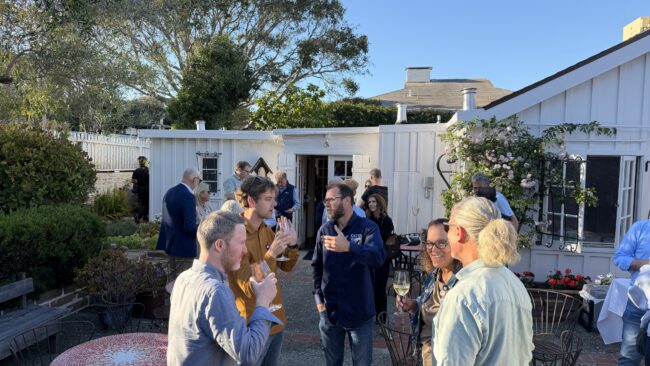
Casa Serrano, Monterey: where the day’s site visits became the evening’s relationships.
Southern California: Where Scale Meets Complexity
From the Central Coast, the delegation pushed south — into the ports, logistics environments, and infrastructure where the low-altitude economy meets industrial scale.
At Fathomwerx, the group explored the intersection of maritime, defense, and emerging technology, with Dutch partners very much in the room.
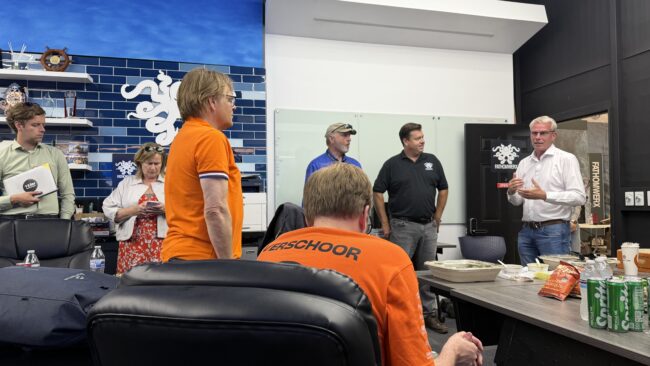
At Fathomwerx: maritime, defense, and air mobility, side by side.
Den Helder Airport makes the case: from demonstration to a fully integrated civil-military offshore aviation ecosystem.
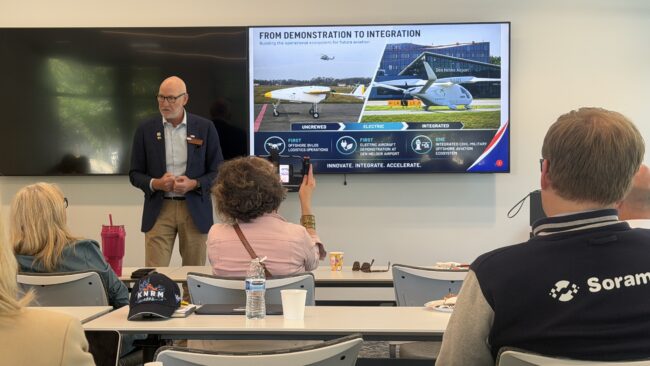
The SoCal days carried the delegation through a UCLA field visit and Netherlands showcase, a pop-up on smart and air mobility innovations, matchmaking at El Camino College, and visits across the region’s scale-stage companies — BETA at Long Beach Airport, Ampaire, Archer, Critical Loop, and more — before an informal goodbye dinner brought the formal program to a close.
Where the Real Value Lives
If you ask anyone who was there, the most lasting outcomes won’t be the ones on the agenda. They’ll be the conversation between sessions, the shared observation at a test site, the question asked over dinner that opened a new line of thinking.
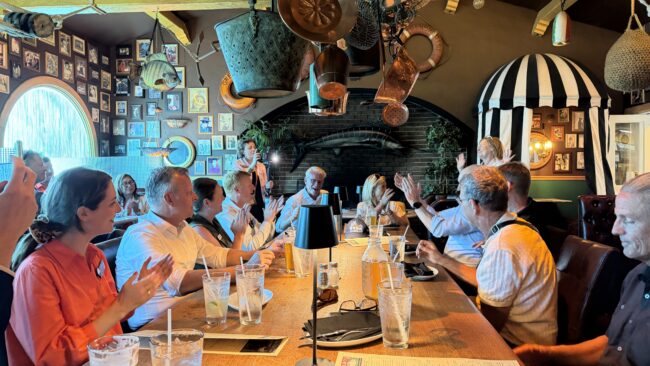
Relationships aren’t a byproduct of an exchange like this — they’re the design.
That was the design all along. The LOI signed at NASA Ames is the headline, and it matters enormously — it’s the bridge from dialogue to action, from a handshake in 2025 to a working agreement with a target date and a real agenda. But the LOI will only be as good as the relationships underneath it. And after ten days across four regions, those relationships are real.
What Comes Next
The closing day asked the delegation to reflect: What did we observe? What surprised us? What did we confirm? And — most importantly — what are the action items worth carrying forward?
For DART, the answer is already taking shape. We have a Letter of Intent to honor and an MOU to build toward by April 2027. We have a workforce ecosystem to keep growing, partners new and old to keep close, and a region with a genuine story to tell about what a clean, accessible, community-rooted aviation economy can look like.
We’re grateful to everyone who made these ten days possible — our Dutch partners, the host organizations across all four regions, the state and regional leaders who gave their time, and the community here on the Central Coast that continues to show up for this work.
From the Salinas Valley to the polder, and back again. The exchange is over. The collaboration is just getting started.
DART is grateful to our partners — including Den Helder Airport, the Coast to Coast Foundation, the Blue Lake Rancheria, Lost Coast Ventures, CCTA, NASA Ames, LCI, CalSTA, Caltrans, Airspace Integration, Hartnell College, UC Santa Cruz CITRIS Aviation and CIDER, and the many host organizations across California — for their collaboration in making the California × Netherlands 2026 Exchange possible.
To learn more or get involved, reach out at mbdart.org or follow us on LinkedIn and social media.