U.S. Department of Labor Visits Monterey Bay’s AAM Workforce Ecosystem
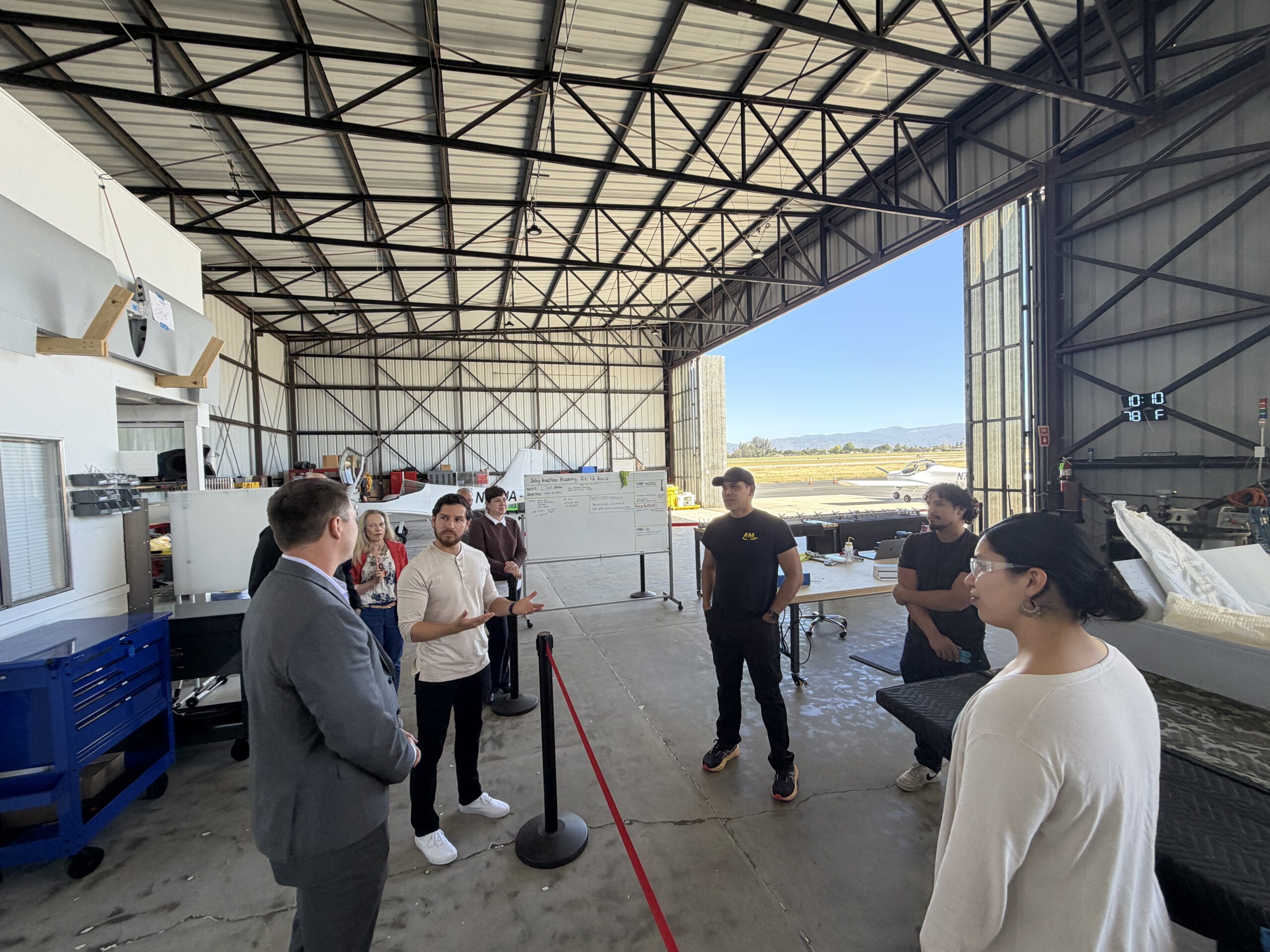
A full-day tour from Watsonville to Marina to Salinas put DART catalyzed apprenticeship programs — and the region’s growing Advanced Air Mobility workforce infrastructure — in front of federal leadership.
On June 11, the Monterey Bay region welcomed Joshua Wetzel, West Coast Regional Representative for the U.S. Department of Labor (USDOL), for a day-long tour of the workforce systems DART and its partners have been building at the intersection of aerospace, advanced manufacturing, and agricultural technology. Organized by DART and made possible by hosts at Joby Aviation and Hartnell College, the visit spanned three stops across Santa Cruz and Monterey Counties — a tour that covered a lot of ground, literally and figuratively.
The visit was an opportunity to show rather than tell: to put a federal workforce official inside the hangars, classrooms, and labs where the Monterey Bay’s next generation of aerospace and advanced manufacturing workers are developing the skills that will define their careers.
Joshua Wetzel (left, in suit) meets with Joby’s Aircraft Maintenance Technician apprentices at Watsonville Municipal Airport, where the tour began.
Stop 1 · Watsonville Municipal Airport
The day began at Watsonville Municipal Airport, where Wetzel was introduced to Joby’s Aircraft Maintenance Technician Apprenticeship (AMTA) — a DART-catalyzed, earn-and-learn program that places apprentices in FAA-regulated aircraft maintenance work from day one. Hosted by Joby Aviation’s workforce development team, the stop gave Wetzel the chance to hear directly from apprentices about their pathways into the field: their backgrounds, what drew them to aviation maintenance, and what a registered apprenticeship has made possible for them that a traditional training program could not.
The Watsonville airport is more than a backdrop. It’s a working hub for Joby’s AMT program and a visible symbol of what regional coordination can produce — a federally registered apprenticeship in an emerging-industry occupation, running at a community airport, in partnership with the company that is building what may become the air taxi of the future.
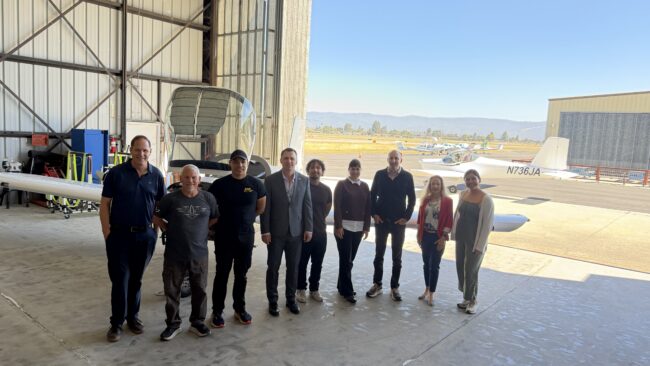
The full tour group at Watsonville Municipal Airport. Joby’s RV-12 aircraft visible in the background is part of Joby Academy Flight School, and the same plane being built by PVUSD CTE students -a pipeline of talent to feed into the AMT apprenticeship.
Stop 2 · Joby Aviation, Marina
From Watsonville, the group traveled south to Joby Aviation’s Marina facility — one of the most significant advanced manufacturing sites on the Central Coast. There, Wetzel toured Joby’s operations and was introduced to DART and Joby’s Advanced Manufacturing Apprenticeship Program (AMAP), which embeds registered apprentices in Joby’s manufacturing workflows at a facility producing components for an aircraft that has no precedent in the FAA’s certification history.
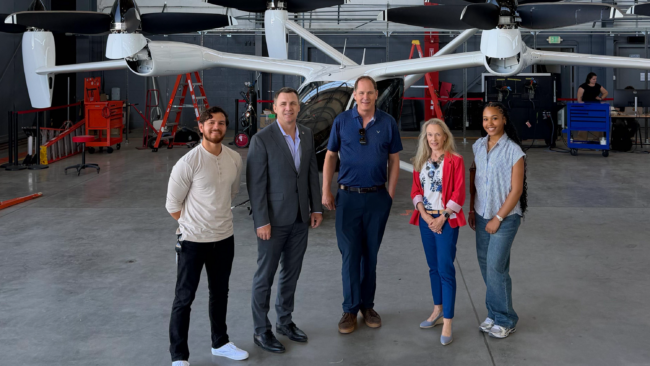
Joshua Wetzel and tour participants at Joby Aviation’s Marina facility, with a Joby eVTOL aircraft in the background. Joby hosts the DART catalyzed, Advanced Manufacturing Apprenticeship Program (AMAP) at this site.
The Marina stop made a vivid case for why the Monterey Bay region is not simply participating in the AAM sector — it is helping to define it. Wetzel was able to see the intersection of advanced manufacturing, aerospace, and workforce development happening in real time, at scale, in a facility that sits less than two hours from Silicon Valley.
“The Administration has prioritized advanced manufacturing and aerospace as strategic growth sectors. What you have going here in the Monterey Bay region represents both of those sectors.”
— Joshua Wetzel, West Coast Regional Representative, U.S. Department of Labor
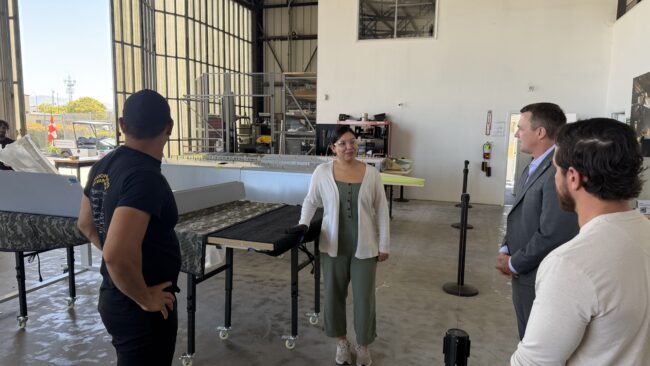
An AMT apprentice walks Joshua Wetzel through the program’s hands-on work at the Watsonville hangar. Hearing directly from apprentices was a central part of the day’s agenda.
Stop 3 · Hartnell College, Alisal Campus, Salinas
The final stop brought the group to Hartnell College’s Alisal Campus in Salinas, where DART’s workforce development work connects most directly with the Central Coast’s deep agricultural roots. Professor Richard Chapman, who leads Hartnell’s Agricultural Mechatronics program, walked Wetzel through the Advanced Manufacturing and Agricultural Technology Training facilities — labs equipped with industrial robotics and automation systems that train students for careers spanning advanced manufacturing, precision agriculture, and, increasingly, drone operations.
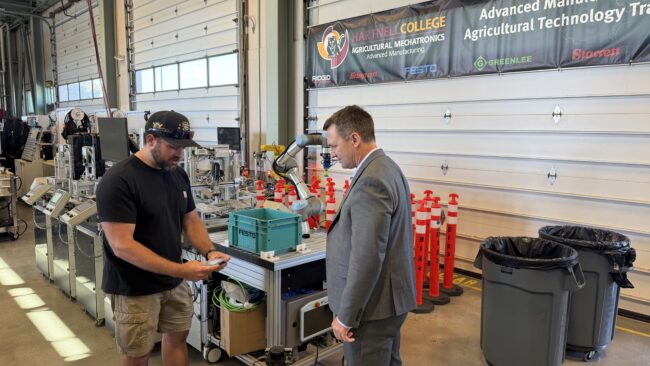
Professor Richard Chapman demonstrates Hartnell College’s agricultural mechatronics and advanced manufacturing training equipment to Joshua Wetzel.
The connection between agricultural technology and AAM is not incidental. As drone applications in agriculture expand — from crop monitoring and precision spray to irrigation management — the technician skills required to deploy, maintain, and operate these systems overlap significantly with those needed in aerospace manufacturing and maintenance. Hartnell’s program sits at that intersection, preparing students for a workforce that doesn’t yet have a single name but is already creating real jobs in the region.
The Alisal Campus stop also spotlighted DART’s Maturing sUAS Pathways (MsUAS) program — a drone and unmanned aircraft systems workforce credential program developed in partnership with Hartnell College — which is building the credentialing infrastructure to connect UAS operators and technicians to legitimate career pathways in a sector where workforce standards are still being written.
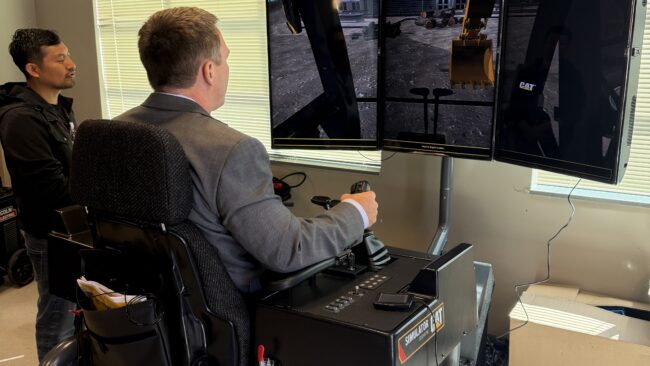
Joshua Wetzel tries out Hartnell’s heavy equipment simulation training station — one example of how the Alisal Campus uses high-fidelity simulation technology to prepare students for skilled trades work.
“Apprenticeships are a key mechanism for rapidly upskilling Americans, and we’re working hard to support their expansion.”
— Joshua Wetzel, West Coast Regional Representative, U.S. Department of Labor
What the Day Demonstrated
Across three stops and more than six hours, the tour made a clear and concrete argument: the Monterey Bay region has built something real. Not a roadmap or a strategic plan, but a functioning system of apprenticeships, credential programs, industry partnerships, and community college capacity that is already placing workers into careers in advanced aviation and manufacturing.
Wetzel’s observation that workforce development is a bipartisan issue — that “something everyone wants is good jobs for Americans” — resonated with what DART and its partners have been working to demonstrate for years. These programs don’t ask workers to wait for an industry to mature before getting started. They create on-ramps now, in occupations where the demand is real and the career trajectories are long.
For DART, the day was also an expression of what a regional workforce intermediary can do when it has the right partners. Joby Aviation brought its facilities and its apprentices. Hartnell College opened its labs and brought its faculty. Andy Stone from Workforce Santa Cruz County rounded out the group alongside DART Board Member Dr. Jackie Cruz and Hartnell leadership. Federal engagement of this kind doesn’t happen without years of relationship-building, program development, and a workforce ecosystem that can stand on its own when someone from Washington shows up to take a look.
We’re grateful to Joshua Wetzel for making the trip, and to every partner who helped make the day possible.